The Hidden Ledger of Ashcroft’s Apothecary Room
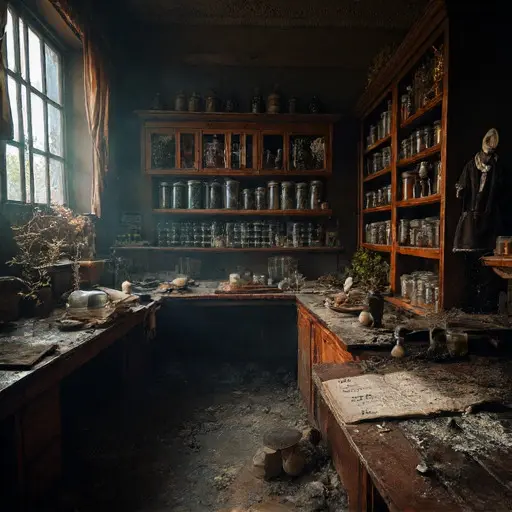
The apothecary room is frozen mid-preparation. The ledger records client prescriptions, herb quantities, and compounding notes, abruptly stopping mid-page. Vials of tinctures sit half-filled, powders scattered on counters, and a mortar holds remnants of crushed herbs.
Every tool and object suggests someone paused work and never returned. Silence dominates, broken only by imagined clinks of glass that no longer move.
Traces of a Careful Hand
This space belonged to Beatrice Ashcroft, apothecary and herbalist (b. 1879, Bath), whose skill served a wide clientele. Evidence of her life is scattered: a folded note from her brother Henry Ashcroft about unpaid rent, a small bundle of lavender tied with string, glass bottles labeled with elegant script, and a half-filled mortar. Her daily routine involved precise measuring, grinding, and mixing, recorded meticulously in the ledger. Her ambition and care were constant, though pressure from rising debts and declining health gradually eroded her energy and focus.
Sudden Halt
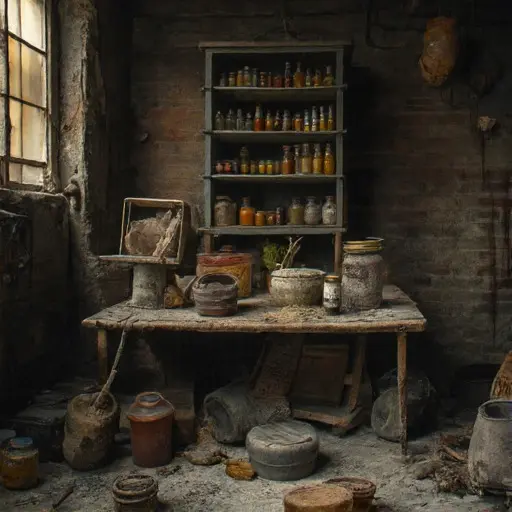
Beatrice’s decline followed worsening arthritis, failing eyesight, and increasing financial stress. The ledger reveals erased notes, unfinished prescriptions, and scattered calculations. A tipped vial leaks faintly onto the counter. Tools lie abandoned mid-use. Each surface bears evidence of interrupted care, a craft halted abruptly. The apothecary preserves the sudden cessation of practice in tangible, haunting detail, with dust settling over herbs and equipment left untouched.
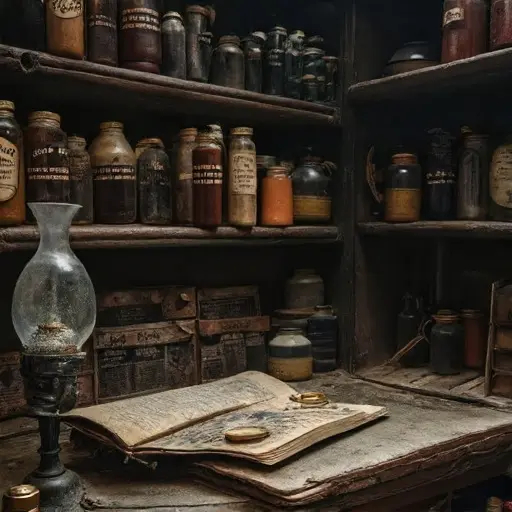
The ledger remains open, entries incomplete, prescriptions unfilled, and mixtures unfinished.
No apprentice continued her work. No record explains Beatrice’s sudden disappearance.
The apothecary room remains abandoned, its herbs, glassware, and ledger a quiet testament to interrupted care, sudden absence, and a mystery lingering among scent, powder, and stillness.