The Eerie Ledger of Hawthorne’s Counting Room
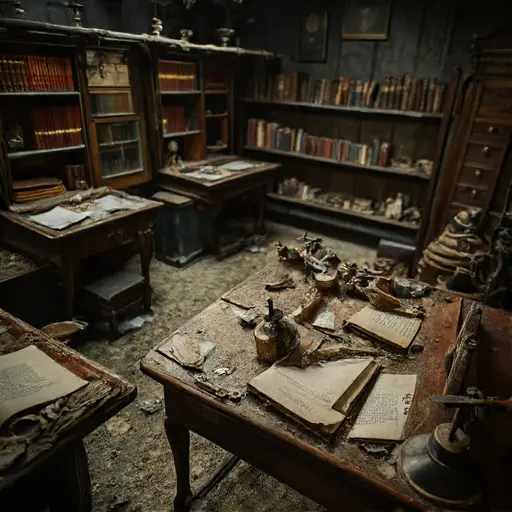
The Counting Room smelled faintly of ink and aged paper, a stillness made heavier by the absence of its keeper. Stacks of ledgers balanced on desks, quills poised beside half-written pages, and the faint imprint of fingerprints on brass inkstands suggested a sudden cessation. Every object echoed routine: meticulous account-keeping interrupted, calculations paused mid-thought, a life’s labor halted silently.
Accounting Discipline and Life
The room belonged to Edmund Hawthorne, chartered accountant, born 1872 in Edinburgh, Scotland. Educated at a private academy, Hawthorne rose quickly in financial circles, overseeing ledgers for affluent industrialists. His profession dictated the interior: heavy oak desks with carved initials, neatly organized account books, brass inkstands, and a wall of filing cabinets. A small portrait of his late sister, Margaret Hawthorne, stood beside a ledger. His temperament was exacting, patient, and methodical; he followed precise routines of tallying, balancing, and auditing, rarely leaving his office until figures aligned perfectly.
Signs of Decline
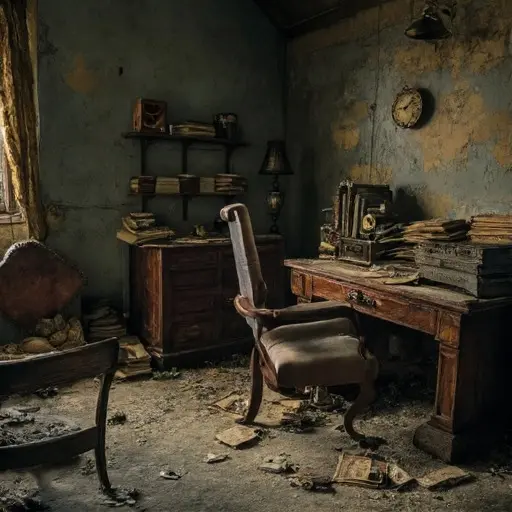
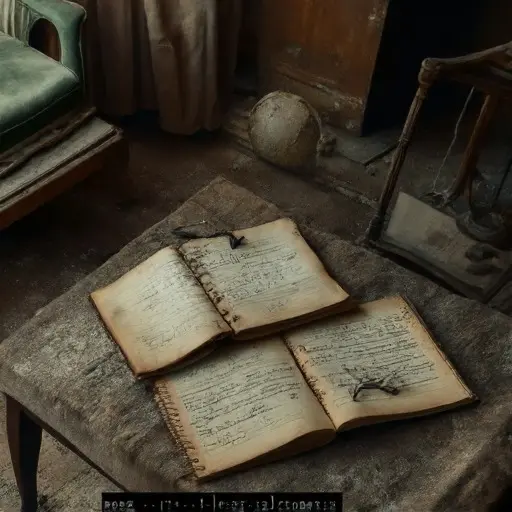
Hawthorne’s decline came through overwork and mounting stress. Diaries found in drawers hint at sleepless nights, headaches, and withdrawn behavior. Some ledger entries grow erratic, handwriting less precise, calculations left incomplete. Filing cabinets remain locked, and correspondence is scattered, hinting at unresolved disputes or sudden client departures. The counting room became a mausoleum for abandoned routine, the orderly accumulation of financial work halted indefinitely.
No announcement marked Hawthorne’s departure.
Edmund Hawthorne never returned to the counting room.
The house remains abandoned, ledgers incomplete, quills still, and accounts unresolved. The counting room preserves the memory of a life devoted to precision, ended by stress-induced collapse, routines indefinitely suspended, leaving financial work unfinished, eerie, and quietly haunting through absence.