The Hidden Tuning Bench of Nakamura’s Silent Parlor
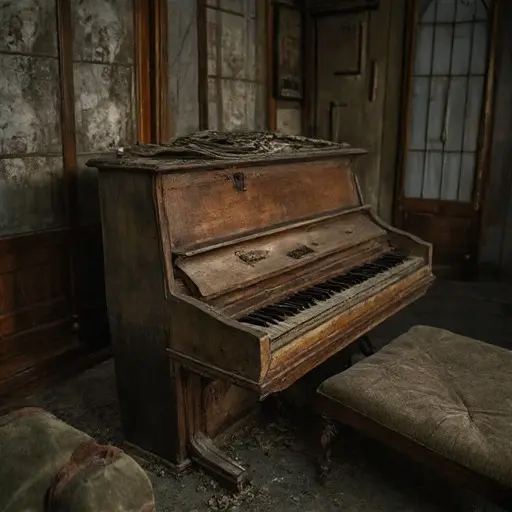
The Parlor is governed by quiet discipline. The felt appears in the opening inventory notebook, listed among supplies with dates and quantities, suggesting a life structured around maintenance rather than performance. The room does not feel empty, only paused, as if sound itself were withheld by agreement.
A Trade of Adjustment and Restraint
This parlor belonged to Hiroshi Nakamura, professional piano tuner, born 1873 in Yokohama, trained through apprenticeship with import houses servicing foreign instruments. His profession shaped the space inwardly: wedges sorted by size, tuning forks aligned by pitch, and cloths folded for cleaning strings. A receipt tucked into the cabinet references his wife, Aiko Nakamura, noting payment deferred until the next season. Hiroshi’s temperament was patient and inward, ambition limited to precision. His days followed ritual—listening, tightening, muting—each adjustment small but exact.
Intervals That Were Never Corrected
The dominant piano remains closed, its last tuning unfinished. Pins are loosened but not reset. A notebook shows repeated revisions of the same octave, markings growing lighter, then stopping entirely. The felt strips, meant to mute adjacent strings, remain inserted, trapping the instrument in silence. The interruption feels deliberate, not urgent, as if he intended to resume after rest.
When Hearing Began to Fail
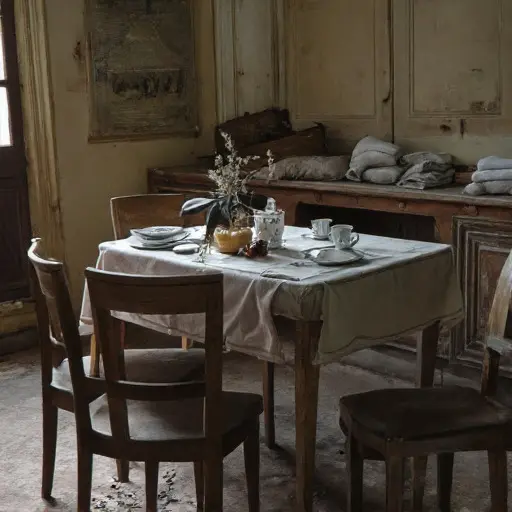
The decline is documented subtly. Margins note “uncertain pitch” and “repeat tomorrow.” Appointments are crossed out, not canceled. Hiroshi’s hearing deteriorated unevenly, high tones blurring first. Clients complained of imperfect tunings, never accusing, simply not returning. Income narrowed. The felt remained unused, the piano left in suspension rather than risk error.

The final notebook ends mid-entry. No explanation follows.
The house remains abandoned, its instruments muted, its felt yellowing quietly, waiting for a pitch that will never be set.