The Hidden Manuscript of Rinaldi’s Scriptorium
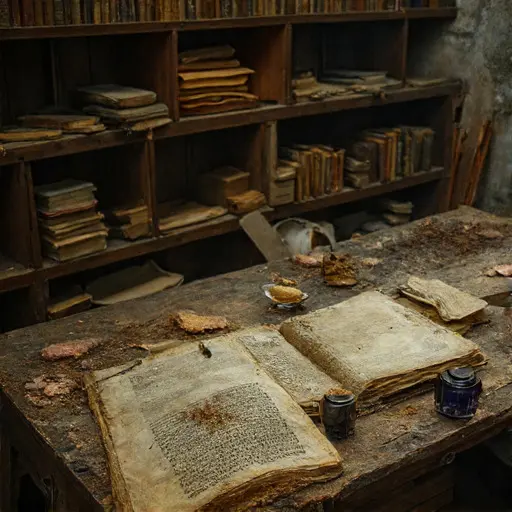
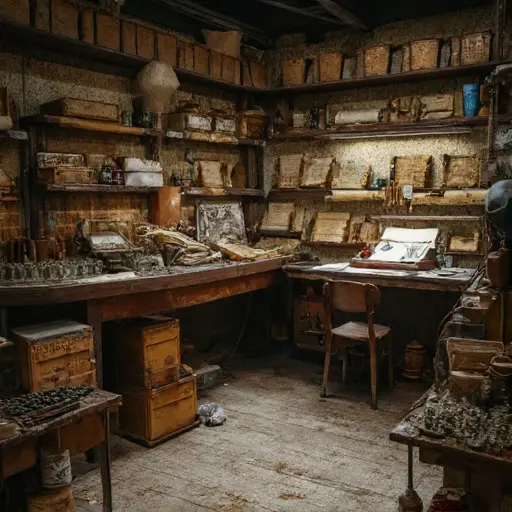
The Scriptorium hums with silent diligence. Here, the manuscript guided every motion: letters carefully formed, lines ruled, illustrations traced. Tools rest mid-use, parchments left unrolled, ink wells half-full.
The absence of movement leaves a delicate tension, each object preserving the memory of careful work abruptly suspended. Even the faint indentation of calligraphy guidelines on untouched sheets speaks to the labor halted in mid-stride.
Devotion in Writing
This room belonged to Alessandro Rinaldi, scribe and illuminator (b. 1873, Florence), trained in monastic scriptoriums and private workshops. His skill is evident in precise lettering, miniature illustrations, and detailed marginalia. A note pinned to a shelf references his niece, Isabella Rinaldi, reminding him to “complete the missal for the cathedral commission.” Alessandro’s temperament was meticulous, patient, and contemplative; ambition focused on creating illuminated manuscripts and transcription of classical texts, every line executed with unwavering care. Even the arrangement of ink pots and parchment shows habitual precision and restraint.
Texts Left Mid-Inscription
On the table, a partially written manuscript shows fine lettering abruptly paused mid-page. Quills rest in ink wells, and dust has settled into every indentation of letters and guidelines. Small sketches and preliminary designs remain scattered, evidence of repeated planning abandoned mid-execution. Each unfinished page reflects suspended intention, halted with no resolution. A tiny jar of crushed lapis lazuli lies tipped over, its pigment unblended, a testament to meticulous work abandoned.
Signs of Decline
Notes, sketches, and partially completed pages reveal repeated corrections; letters retraced, colors re-applied. Alessandro’s decline was physical: worsening tremors in his hands and failing eyesight hindered delicate calligraphy. Each unfinished manuscript embodies halted intention, careful artistry curtailed by bodily limitation, leaving a life of painstaking labor frozen in place.
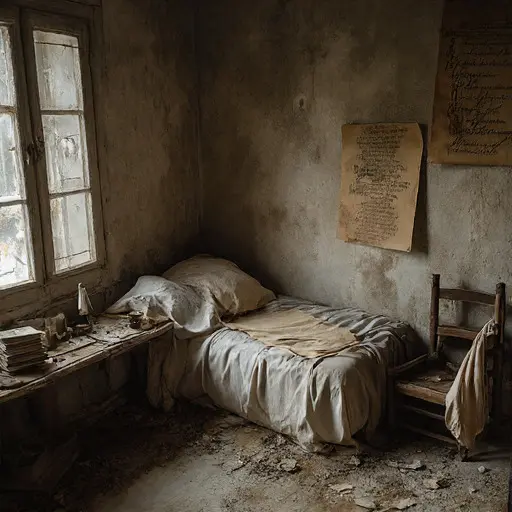
In a drawer beneath the writing table, Alessandro’s final manuscript remains half-written, quills poised yet idle, with gold leaf flakes scattered across the desk.
No explanation exists for his disappearance. No apprentice returned to continue the work.
The house remains abandoned, its parchments, ink, and manuscript a quiet testament to interrupted scribing and unresolved devotion.