The Forgotten Sewing Frame in Almeida’s Bindery Room
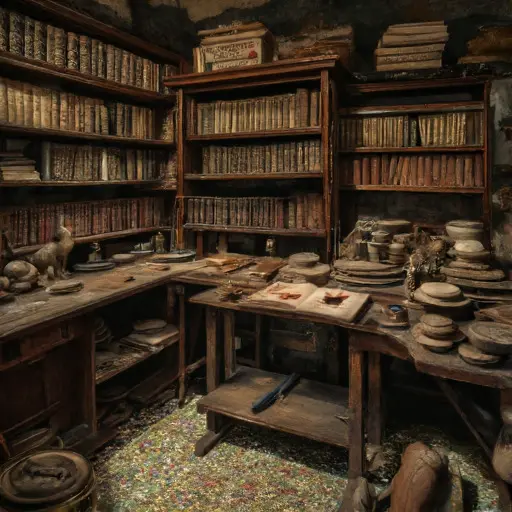
The Bindery holds a restrained hush, thick with halted routine. Here, gatherings lie squared but unsewn, their edges aligned with a patience that has nowhere to go. The presses remain tightened on nothing, and the lamp’s wick has burned down to a nub, implying a workday that ended without conclusion.
The Binder’s Hand and Habit
The tools belonged to João Manuel de Almeida, bookbinder (b. 1874, Coimbra), trained through clerical workshops and small trade schools. His education shows in the Latin scraps used as wastepaper and the careful titling of spines. A slip of paper names his wife, Teresa Almeida, reminding him to “air the calfskins.” His temperament was orderly, his ambition modest: to bind municipal records and private libraries cleanly, durably, without flourish.
Where Gatherings Wait
On the central table, folded sections are stacked by size and text block, each wrapped in twine. The sewing frame is threaded and ready, needles parked in a cork strip. One stack of gatherings is numbered but out of sequence, suggesting an interruption mid-count rather than at rest.
Pressures Without Noise
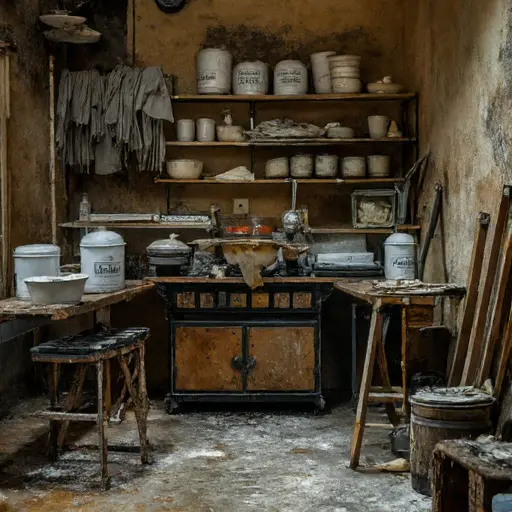
Receipts tucked into a Bible show delayed payments and crossed-out commissions. A notice, folded and never burned, mentions revised regulations for printed matter. João’s later notes grow sparse, his handwriting tight. Some bindings are dismantled and rebound twice, margins shaved too close, titles retooled. The cause is never stated, but the repetition suggests correction under scrutiny rather than pride.
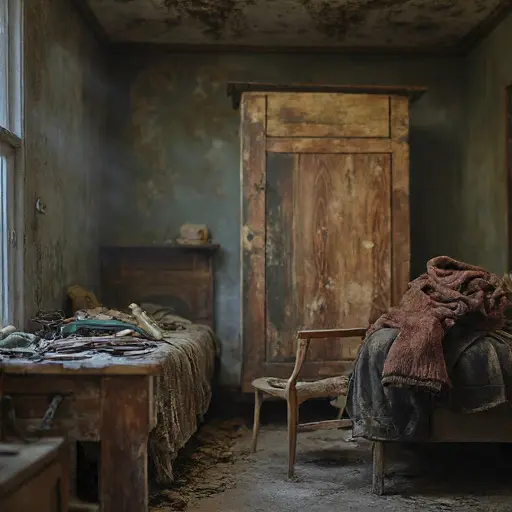
In a drawer beneath the sewing frame, João’s final set of gatherings remains loose, never stitched.
No letter explains his absence. No client reclaimed their books.
The house stays abandoned, its bindings unfinished, its careful order slowly surrendering to dust and silence.