The Hidden Engraving Blocks of the Fekete Print Atelier
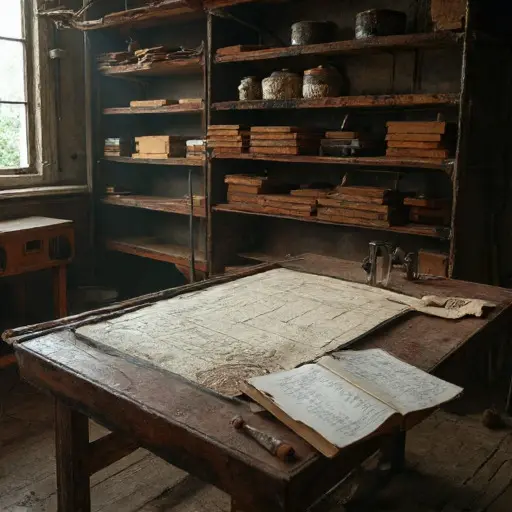
A quiet, tense stillness fills the Atelier, where printing blocks remain clamped, and tools lie idle. Each burin, ink jar, and block implies repeated, meticulous routines abruptly halted, leaving the room suspended in frozen craftsmanship.
The Engraver’s Craft
These tools belonged to Ferenc Fekete, engraver (b.
1879, Szeged), trained under a master and commissioned for book illustrations, signage, and decorative prints. His Hungarian annotations record line thickness, depth, and ink application. A folded note references his apprentice, Erzsébet Fekete, “finish border details Thursday,” showing a structured workflow of carving, inking, and pressing executed with careful, exacting precision.
Organization of Blocks and Tools
On the engraving table, burins and small hammers lie neatly aligned. Stacks of carved and partially carved blocks rest by project; reference sketches lean against the wall. A half-carved block rests weighted under a wooden press, reflecting Ferenc’s suspended method. Dust fills the grooves and indentations left by hands and tools, preserving faint impressions of repeated motions just before the abrupt halt.
Signs of Interruption
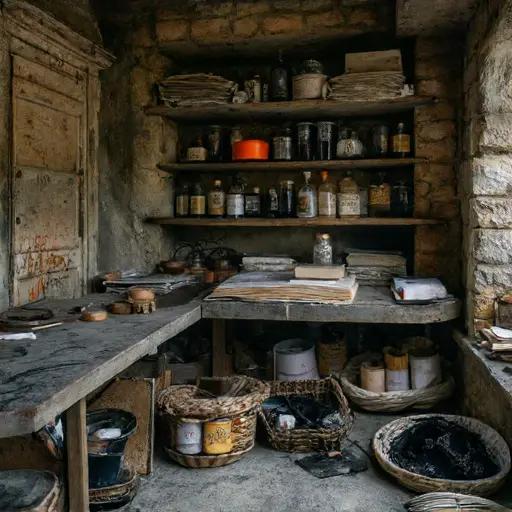
Later ledger entries reveal incomplete prints and uneven engraving depth. Margin notes—“client revisions needed”—are smudged. Tools are misaligned; half-finished blocks lie across the workbench. Ferenc’s precise workflow faltered under increasing arthritis and eye strain, leaving projects incomplete and atelier routines indefinitely suspended. Each abandoned block embodies halted intention and interrupted artistry.
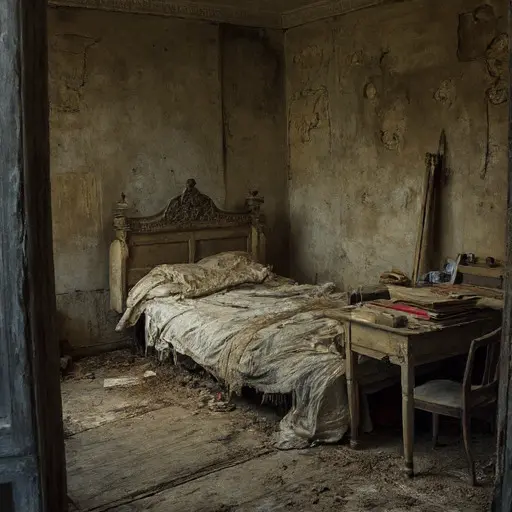
In the Atelier’s final drawer, Ferenc’s last block rests half-carved, sketches incomplete, prints unfinished. A penciled instruction—“review with Erzsébet”—cuts off abruptly.
No record explains why he abandoned his work, nor why Erzsébet never returned.
The house remains abandoned, its engraving table, blocks, and block sheets a quiet testament to interrupted printmaking and unresolved dedication.