The Eerie Clay Molds of the Nagy Pottery Studio
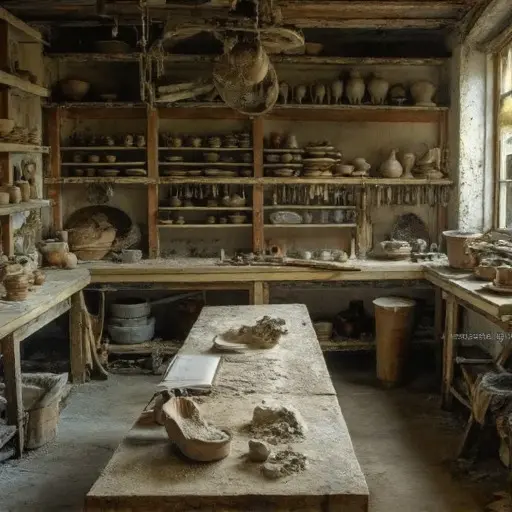
A quiet, patient stillness fills the Studio, where wheels are idle and tools rest mid-use. Every mold, brush, and piece of clay implies carefully repeated routines abruptly halted, leaving the space suspended in anticipation of form and fire.
The Potter’s Method
These tools belonged to Emil Nagy, potter (b.
1877, Pécs), trained in a local guild and commissioned for decorative tiles, vessels, and civic pottery. His Hungarian annotations detail clay mixtures, kiln temperatures, and glaze layering. A folded note references his apprentice, Anikó Nagy, “prepare kiln batches Wednesday,” demonstrating a precise workflow of molding, shaping, and firing executed with meticulous care and rhythm.
Arrangement of Clay and Implements
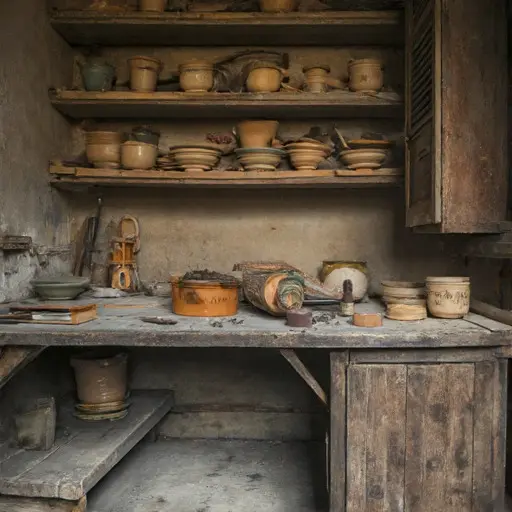
On the workbench, carving tools, brushes, and sponges are laid out by size; partially dried clay molds rest carefully on shelves. Bowls and vases sit stacked by project. A half-formed clay mold is weighted under a small wooden block, reflecting Emil’s suspended labor. Dust settles in fingerprints and grooves, preserving faint impressions of hands at work just before the abrupt halt.
Signs of Decline
Later notebook entries reveal uneven drying, cracked edges, and incomplete decorative patterns. Margin notes—“client order delayed”—are smudged. Tools are misaligned; bowls and vases lie precariously stacked. Emil’s precision faltered under chronic back pain and arthritis, leaving molds unfinished and studio routines suspended indefinitely. Each incomplete vessel and mold testifies to halted intention and interrupted artistry.
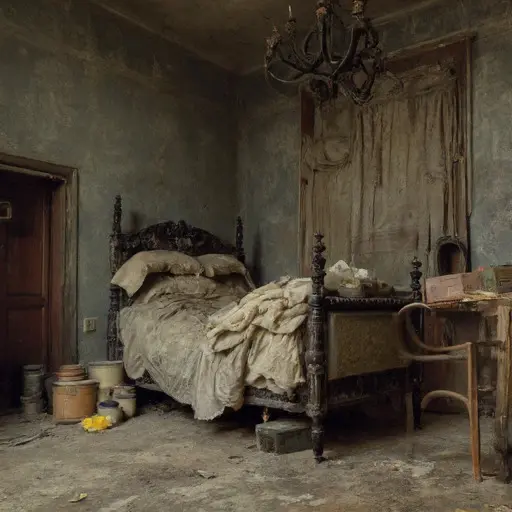
In the Studio’s final drawer, Emil’s last mold rests half-shaped, notes incomplete, vessels unfinished. A penciled instruction—“finish with Anikó”—cuts off abruptly.
No record explains why he abandoned his work, nor why Anikó never returned.
The house remains abandoned, its potter’s wheel, molds, and mold sheets a quiet testament to interrupted pottery and unresolved devotion.