The Silent Score Sheets of the Farkas Music Conservatory
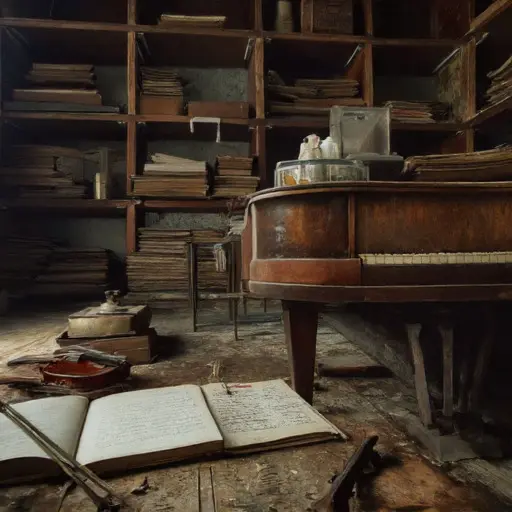
A hushed, careful stillness fills the Conservatory, where pianos remain untouched, bows lie still, and sheet music is scattered across chairs. Every instrument, manuscript, and metronome implies a disciplined rhythm suddenly interrupted, leaving the room suspended between anticipation and silence.
The Composer’s Practice
These implements belonged to László Farkas, composer (b.
1878, Szeged), trained at a local academy and commissioned for chamber works, recitals, and private concerts. His Hungarian annotations indicate tempo, dynamics, and phrasing. A folded note references his pupil, Mária Farkas, “prepare quartet parts Tuesday,” showing a structured workflow of writing, rehearsing, and refining music executed with exacting care. His temperament was methodical and reflective, evidenced in carefully stacked scores and inked corrections.
Organization of Scores and Instruments
On the piano, metronomes, bows, and rosin lie arranged with precision. Sheet music stands hold half-written scores; shelves contain completed manuscripts stacked by project. A partially composed score rests weighted under a glass dome, reflecting László’s suspended method. Dust collects in pencil markings, page folds, and depressions from pens, preserving impressions of the last deliberate, exacting movements before work halted.
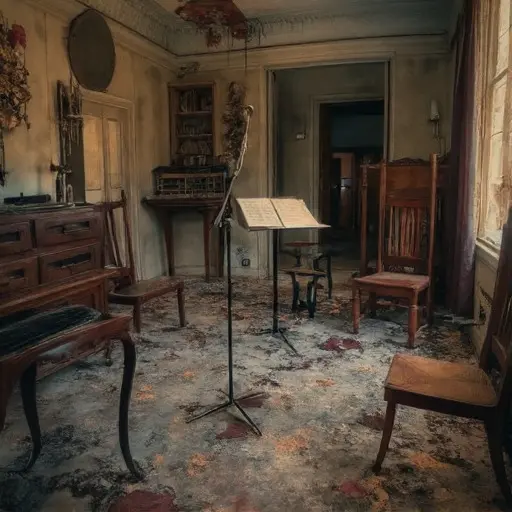
Signs of Interruption
Later notebook entries reveal incomplete compositions; some measures are missing, dynamics unfinished. Margin notes—“revise phrasing”—are smudged. Instruments are misaligned, bows unrosined, and scores unbound. László’s meticulous work faltered under increasing tremors in his hands and mounting exhaustion, leaving musical pieces incomplete and conservatory routines indefinitely suspended. Each abandoned sheet embodies unfinished intention, while the faint smell of ink and rosin lingers as a testament to halted artistry.
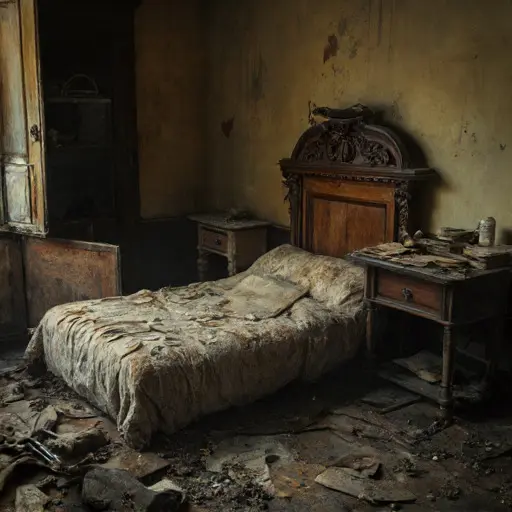
In the Conservatory’s final drawer, László’s last score ends mid-measure, notes incomplete, passages unfinished. A penciled instruction—“review with Mária”—cuts off abruptly.
No record explains why he abandoned his work, nor why Mária never returned.
The house remains abandoned, its piano, manuscripts, and score sheets a quiet testament to interrupted composition, unresolved music, and suspended devotion.