The Hidden Archive of Rossi’s Forgotten Engraver Studio
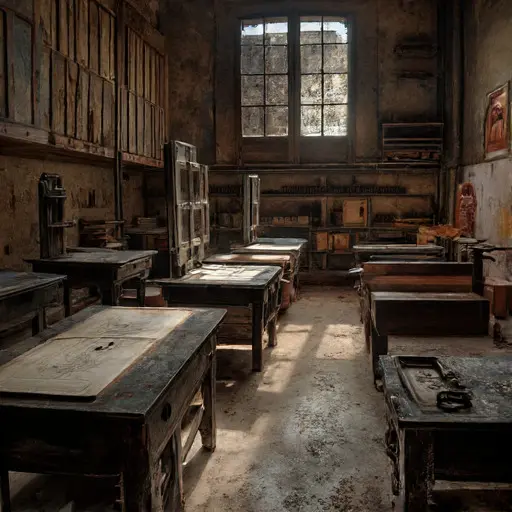
The engraver studio exudes suspended quiet. On a central bench, a copper plate lies half-etched, its etch design incomplete. Burins and needles lie neatly beside ink pots, the room echoing the missing rhythm of precise hands at work.
Lines Drawn with Precision
The studio belonged to Giovanni Rossi, professional engraver (b. 1870, Florence), trained in classical workshops and commissioned for book illustrations, medals, and private collections. His handwriting appears in sketchbooks and client orders, precise and meticulous. A note references his apprentice, Livia Rossi, who prepared plates and polished tools. His daily routine involved planning etch designs, carving fine lines, and applying ink with deliberate care. Temperament methodical, ambition measured, and devotion to engraving defined his life, each line carefully plotted.
Plates Left Mid-Cut
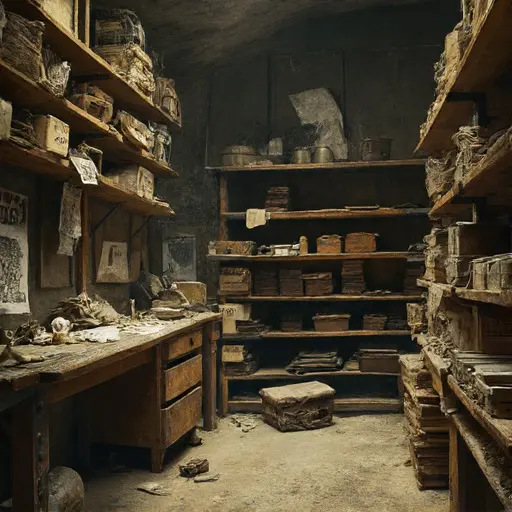
Copper plates and unfinished engravings lie untouched. A ledger beneath the main bench lists client commissions and etch instructions but ends abruptly. Dust coats tools, ink pots remain sealed, and burins rest idle, poised for strokes never completed. Sheets of paper with partial impressions curl slightly on the table, frozen in the moment between intention and execution.
When Craft Could Not Endure
Later ledger entries are sporadic. Correspondence from clients remains unopened. Rossi’s decline was caused by photomechanical reproduction and mass printing; handcrafted etch designs could not compete with industrial speed. Daily work slowed, then ceased entirely, leaving every plate and print suspended mid-creation.
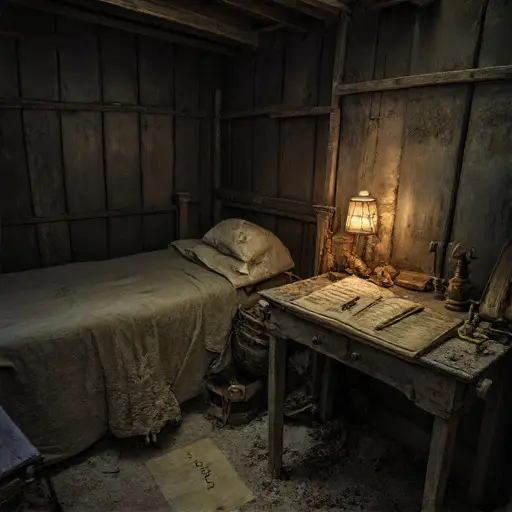
The final ledgers and engraving tools remain untouched. No note explains Rossi’s departure; Livia never returned to retrieve the materials. The house remains abandoned, benches stacked, plates aligned, each etch frozen mid-cut, a testament to delicate labor halted permanently, the silent weight of unfinished artistry filling every corner.