The Haunting Cabinet of the Merroway Family Parlour
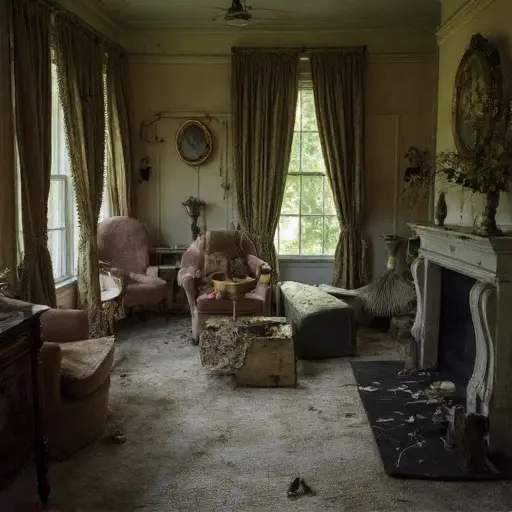
A faint sourness of machine oil lingers in the Study, though the lamps have not been trimmed in years. Somewhere beneath the drifts of paper lies a ledger, half-open as though its owner meant to return before the ink dried. The quiet suggests only halted routines, yet nothing here has been ransacked.
The Clockmaker’s Intentions
The scattered brass gears, hand-cut springs, and delicate escapements reveal the life of Edmund Merroway, clockmaker (b. 1869, Leeds). His schooling had been modest, but his precision earned clients among the middling classes. Notes pinned to a blotter mention his sister, Margaret Merroway, who appears in penciled reminders—“tea at three,” “her letters to be answered”—evidence of a conscientious, temperate man.
Pressure Beneath the Craft
A streak of lampblack over the cabinet drawers and a faint scorch along the workbench edge imply a hurried or troubled evening. Yet the tools remain aligned, suggesting he fought to maintain order even as deadlines or doubts pressed upon him.
Ledger of Strain
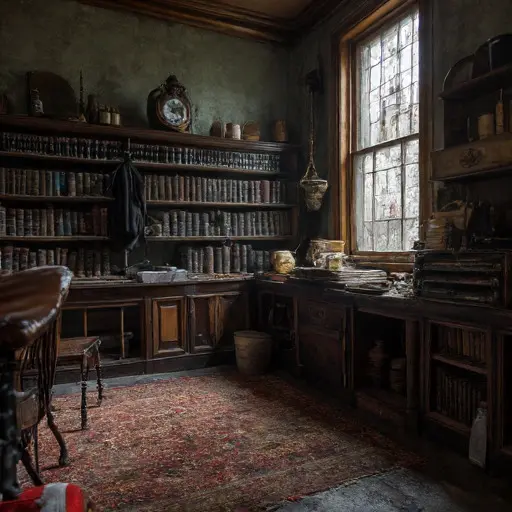
Pinned receipts reveal commissions finished under unusual haste. Marginalia in Edmund’s compact handwriting grows unsteady near the end, lines wavering as though written under fatigue. A narrow drawer, recently forced, contains a torn page hinting at an accusation—unfinished phrases, no dates.
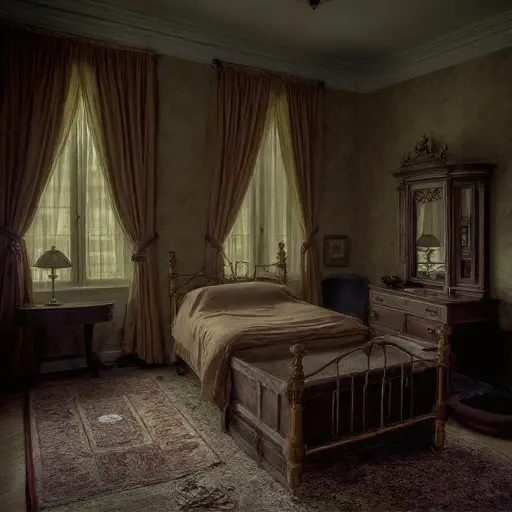
In the final drawer of the Study, a set of finished clock faces lies untouched, each bearing Edmund’s neat signature. Their silence is complete. No record explains why the work ceased, why Margaret never returned for her brother, or why the bed remained half-packed.
The house keeps its own counsel now, its rooms settled into abandonment, gears unwound and unanswered.