Hawthorne’s Silent Pantry and the Lost Household Ledger

The pantry stands intact, yet unfinished, its routines broken mid-measure. Dust coats the brass scale arms, and a ledger lies open where accounts once balanced daily. This room bears the weight of inventory, a word repeated in chalk marks, tags, and lists, now frozen into quiet accusation.
Nothing is overturned. Nothing is cleared away. The silence comes not from emptiness, but from work abandoned without farewell.
The Order of Inventory
Edith Margaret Hawthorne, household provisioner, was born in 1868 in a river town known for mills and trade. Her education shows itself in careful penmanship and arithmetic columns ruled by hand. A single cupboard holds labeled tins—tea, sugar, rice—each dated. Her sister Clara Hawthorne appears only indirectly, through mended aprons folded in a drawer and a second cup never moved from its hook.
Edith’s days followed a strict cadence: weighing, recording, sealing, and storing. The pantry was her dominion, governed by discipline and foresight. The house depended upon her quiet competence.
Pressure Beneath the Shelves
The ledger tells its own story. Early pages show confidence: surplus margins, tidy sums. Later entries tighten. Corrections crowd the lines. A page is torn out. Another is pasted back crookedly. Edith began recalculating, then rechecking, then crossing out entire weeks. Supplies did not match receipts. Nothing could be proven wrong, yet nothing resolved.
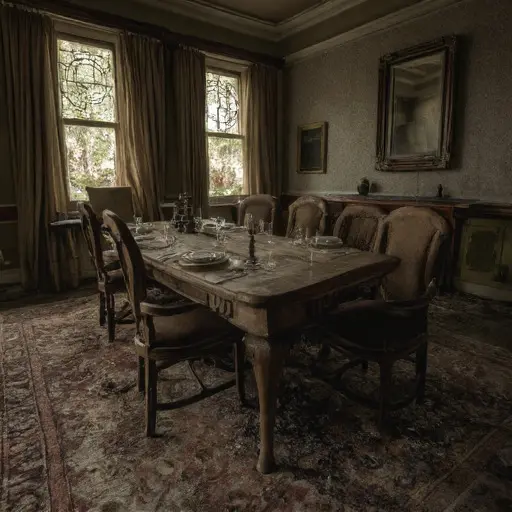
No voices remain to explain whether loss came from error, accusation, or fear. The house absorbed the tension. Doors stayed closed longer. Meals grew simpler. The pantry filled with goods that were never used.
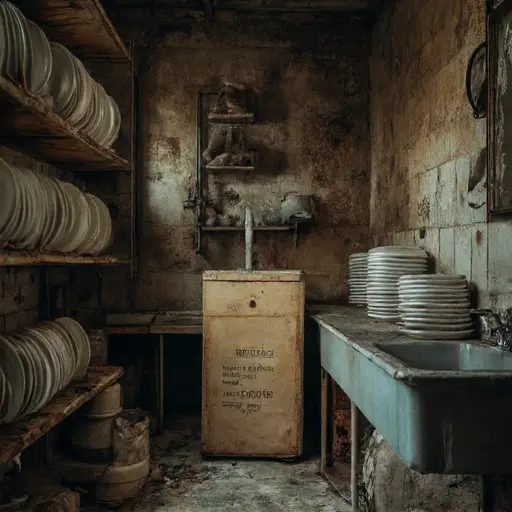
When Edith vanished, no drawer was emptied. The ledger stayed open. Clara’s cup remained unused. The house did not resolve the sums left behind. Inventory endured, but its keeper did not. The pantry remains stocked, balanced forever on an unfinished line, and the house stands abandoned, still waiting for accounts to close.