The Eerie Scales of the Petrov Music Conservatory
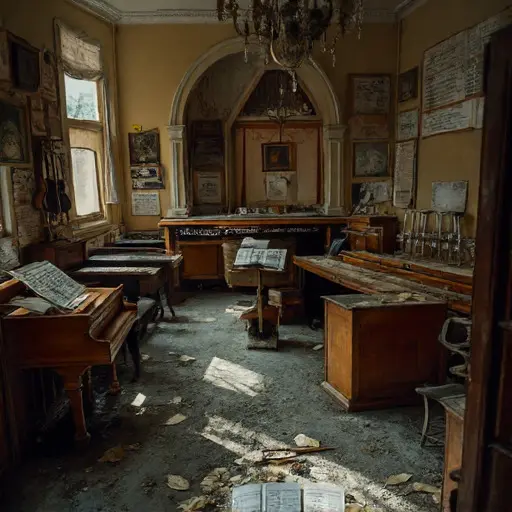
The Music Conservatory exudes quiet, instruments and scores frozen mid-rehearsal. A partially annotated piano score rests on a stand, its tempo notes left unfinished.
Life in Harmonies
These implements belonged to Anatoly Petrov, music instructor (b.
1876, St. Petersburg), trained at a municipal conservatory yet teaching private students and providing ensemble coaching. His precise Russian notes track fingerings, bowing techniques, and tempo instructions. A slip referencing his student, Elena Petrov, “collect lessons Monday,” indicates highly structured teaching routines, interweaving professional ambition with domestic oversight, reflecting a temperament of meticulous care.
Instruments and Notations
On the central bench, tuning forks, metronomes, and pencils lie arranged. Partially marked scores lean against piano lids. A ledger beneath folded sheets lists students, pieces, and intended tempo adjustments. One piano sonata shows tempo annotations halted mid-page, suggesting sudden interruption of practice. Pencil smudges along margins hint at further revisions planned but never applied.
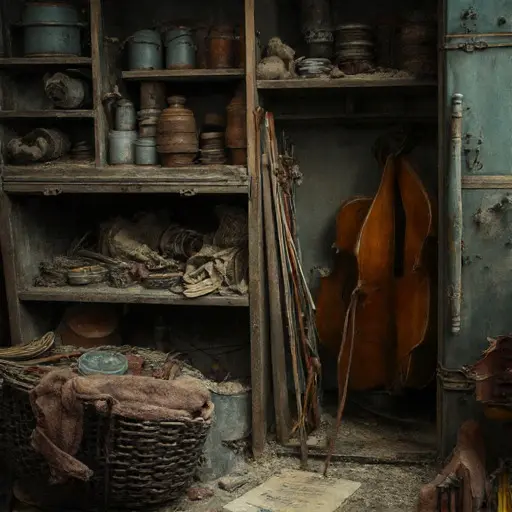
Signs of Waning Precision
Later ledger entries reveal inconsistent tempo markings, misaligned musical phrases, and smudged notes. Some instruments are unstrung or misaligned; a note—“student complaint unresolved”—rests beneath a partially annotated score. Advancing age, strained vision, and fatigue gradually undermined Petrov’s precision, leaving lessons incomplete, annotations half-finished, and tempo markings abandoned mid-lesson.
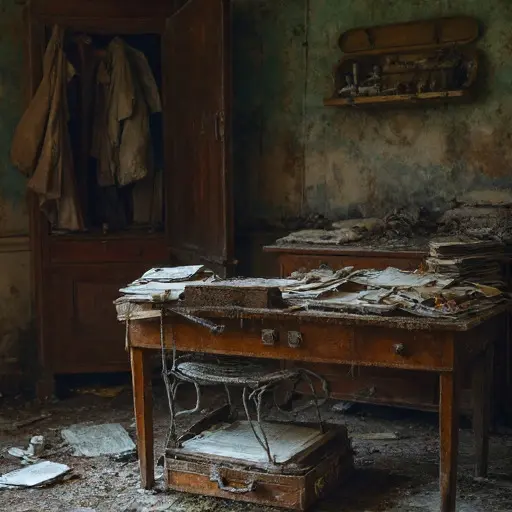
In the Conservatory’s final drawer, Petrov’s last tempo record ends abruptly, fingering notes and musical markings left unfinished. A penciled note—“complete for Elena”—stops mid-word.
No record explains why he abandoned his teaching, nor why Elena never retrieved the scores.
The house remains abandoned, instruments, scores, and annotations frozen in quiet incompletion, every note and tempo suspended, awaiting hands that will never return.