The Forgotten Pattern Folios of the Rossi Tailoring Room
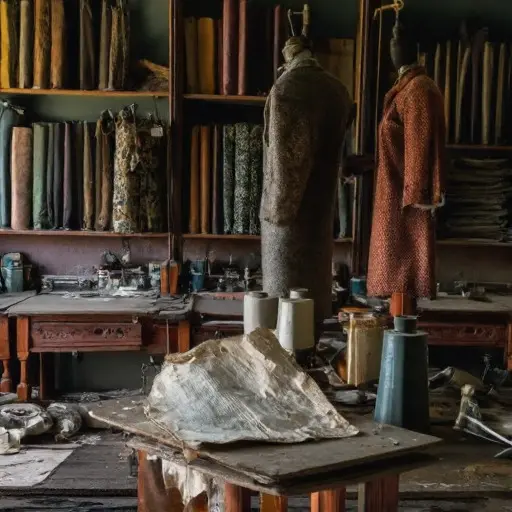
The Tailoring Room exudes quiet, the tools and materials frozen mid-use. A partially sewn coat rests on a mannequin, its measure markings left incomplete.
Life Cut in Thread
These implements belonged to Giovanni Rossi, master tailor (b.
1876, Milan), trained in a family atelier but supplying bespoke garments for urban clients and local theatres. His handwritten Italian notes detail measurements, stitch counts, and pattern adjustments. A slip referencing his niece, Clara Rossi, “collect coat Friday,” suggests a structured routine of fitting sessions and careful record-keeping, punctuated by daily domestic attentions.
Precision in Every Cut
On the central table, scissors, chalk, and needles lie aligned. Pattern pieces, partially pinned to fabric, lean against the benches. A ledger beneath folded cloths lists client names, measurements, and deadlines. A half-cut jacket shows careful measure markings, abandoned mid-stitch, implying that Rossi intended to complete fittings but never returned to finalize the work.

Signs of Waning Craft
Later ledger entries reveal inconsistent sleeve lengths, uneven seams, and smudged chalk lines. Several garments show puckered fabric or misaligned hems; a note—“client complaint pending”—rests beneath a partially sewn waistcoat. Declining eyesight and hand tremors gradually undermined Rossi’s precise work, leaving jackets incomplete and patterns disrupted, stitch lines abandoned mid-course.
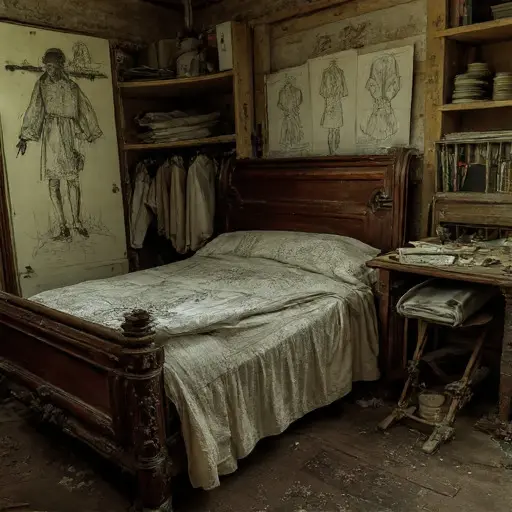
In the Tailoring Room’s final drawer, Rossi’s last measure register ends abruptly, dimensions and alterations left unfinished. A penciled note—“finish for Clara”—stops mid-word.
No record explains why he abandoned his craft, nor why Clara never collected the garments.
The house remains abandoned, fabrics, tools, and patterns frozen in quiet incompletion, every stitch and fold suspended, awaiting hands that will never return.