The Silent Score Pages of the Moretti Pianoforte Chamber
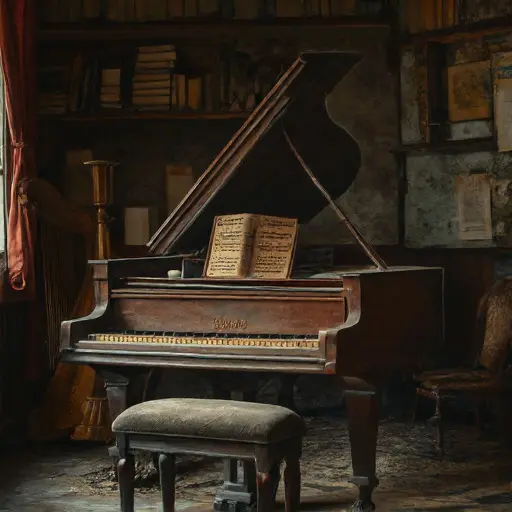
The Pianoforte Chamber exudes quiet, the halted music etched into the dust. A partially opened score lies forgotten, its tempo unmarked.
Harmonies of a Life
These instruments and manuscripts belonged to Giovanni Moretti, piano tuner and composer (b.
1872, Florence), trained under a cathedral organist. His compact Italian notes document tuning sequences and composition sketches. A slip referencing his niece, Elisabetta Moretti, “deliver preludes Friday,” implies a carefully timed rhythm of adjustments and compositions intertwined with domestic routine.
Tools of Sound and Silence
On the piano bench, tuning forks, screwdrivers, and felt hammers lie aligned. A ledger beneath sheet music lists clients, instrument types, and fine adjustments. A half-finished fugue leans against the piano, quill strokes precise yet paused mid-line. The room holds an air of meticulous preparation, every object positioned for measured attention.
Signs of Faltering Rhythm
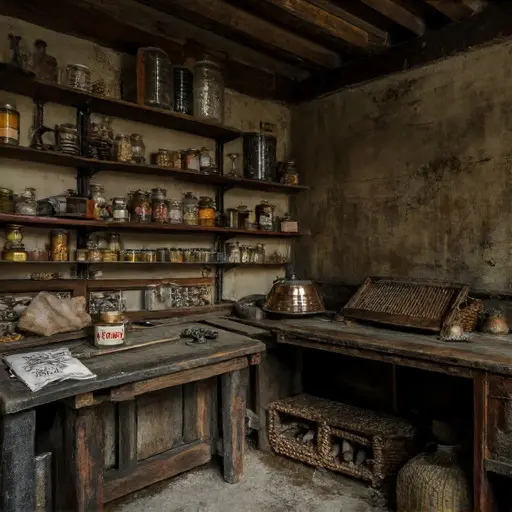
Later entries in Moretti’s ledger show irregular tuning notes and crossed-out measures. Several strings are left unadjusted, keys misaligned. A margin note—“client complaint—fretful response”—is folded beneath a polishing cloth. Fatigue and an illness affecting his hands caused precision to decline, leaving compositions and repairs incomplete and unsatisfactory.
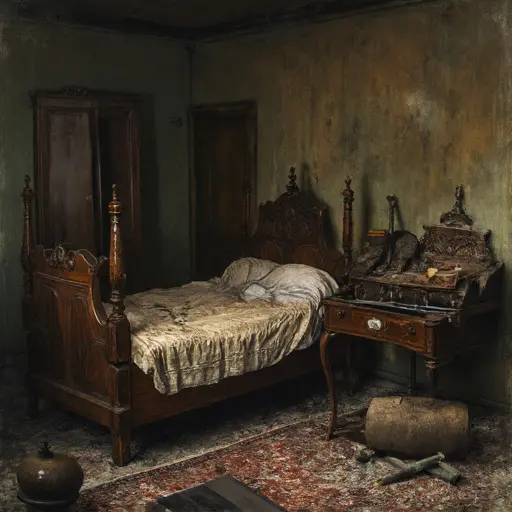
In the Pianoforte Chamber’s final drawer, Moretti’s last score ends mid-measure, tempo left unmarked. A penciled note—“finish for Elisabetta”—stops abruptly.
No trace explains why he abandoned his instruments, nor why Elisabetta never collected the scores.
The house remains abandoned, pianos and manuscripts frozen in silence, music suspended in unfinished hands, the quiet weight of absence pressing on every surface.