The Hidden Scroll of the Yamamoto Musicologist’s Chamber
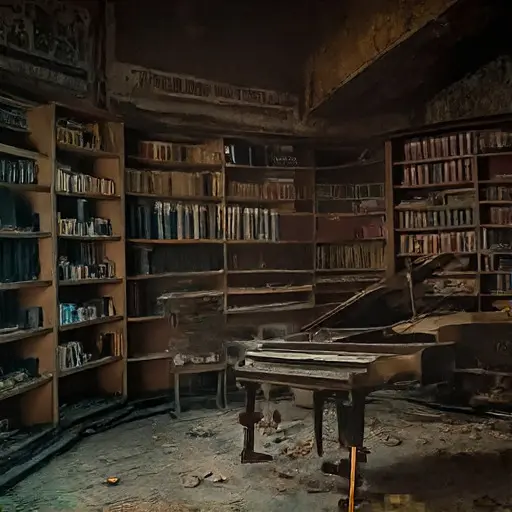
A profound stillness fills the Musicologist’s Chamber, where penciled note sequences on a score vanish mid-measure, hinting at interrupted scholarship and halted musical inquiry.
Cataloging Sound
These implements belonged to Haruto Yamamoto, musicologist (b. 1883, Kyoto), trained in traditional Japanese music studies with exposure to Western composition.
His notes record scales, harmonies, and transcription techniques. A folded slip references his assistant, Emi Yamamoto, “complete koto transcription Wednesday,” revealing a structured daily regimen of score study, instrument tuning, and manuscript preparation, alongside a temperament marked by analytical precision, careful listening, and relentless scholarly discipline.
Instruments and Manuscripts
On the main table, quills, tuning tools, and inkpots lie in careful alignment. Partially annotated manuscripts rest beneath blotters. A ledger beneath a folded cloth details tempo markings, key signatures, and dynamic notation, each carefully dated. A half-transcribed sonata remains on the stand, evidence of work abruptly halted mid-phrase, leaving intricate harmonies frozen mid-execution.

Faltering Precision
Later ledger pages reveal repeated corrections to rhythm and notation. Several transcriptions display misaligned measures or incomplete harmonies. A margin note—“teacher questions phrasing”—is smudged, reflecting mounting pressure. Tools lie abandoned across tables. Failing eyesight and a persistent tremor in Haruto’s hands forced exacting musical work to falter, leaving transcriptions permanently unfinished and scholarly routines disrupted.

In the Chamber’s final drawer, Haruto’s last note sequence ends mid-staff, penciled instructions trailing into blank space. A reminder—“review with Emi”—stops suddenly.
No record explains why he abandoned his work, nor why Emi never returned to complete the transcriptions.
The house remains abandoned, instruments and manuscripts frozen mid-creation, preserving the quiet persistence of musicological study interrupted, unresolved, and suspended in hushed neglect, a testament to meticulous artistry left unfinished.