The Eerie Ledger of the Nakamura Calligrapher’s Alcove
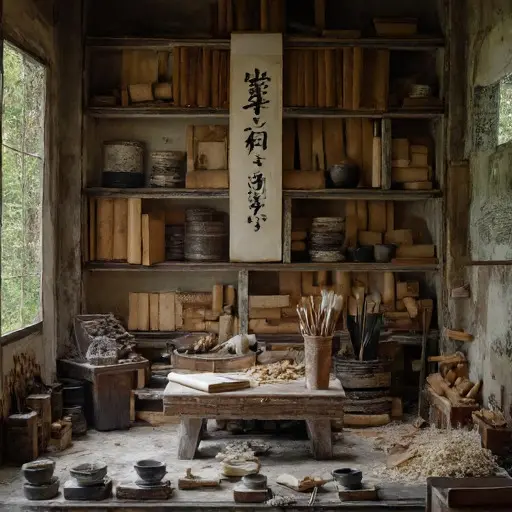
A heavy, expectant silence fills the Calligrapher’s Alcove, where penciled stroke guidelines on a practice scroll vanish mid-flow, hinting at interrupted discipline and abandoned mastery.
Discipline in Ink
These tools belonged to Hiroshi Nakamura, calligrapher (b. 1886, Kyoto), trained in a traditional calligraphy school.
His notes record brush pressure, ink consistency, and character form. A folded slip references his apprentice, Aya Nakamura, “finish haiku scroll Friday,” revealing a daily regimen of brush practice, ink grinding, and character drafting, reflecting a temperament of patience, reverence, and exacting care.
Brushes and Scrolls
On the main table, bamboo brushes, inkstones, and water jars lie meticulously arranged. Practice sheets rest beneath blotters. A ledger beneath a folded cloth documents character proportions, stroke sequences, and paper grain observations, each carefully dated. A half-finished scroll with elegant kanji remains pinned mid-air, evidence of interrupted work and a sudden halt in artistry.
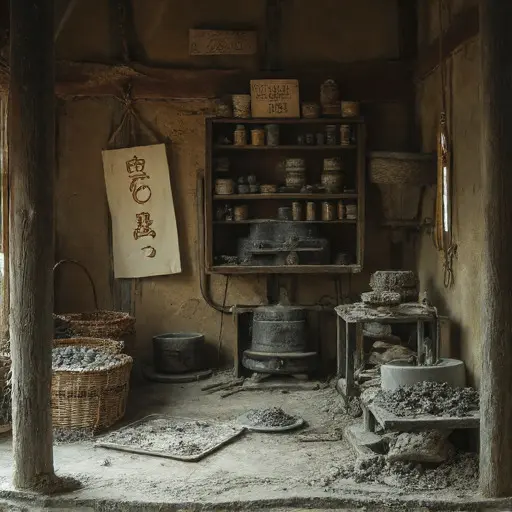
Waning Focus
Later ledger pages reveal repeated corrections to character alignment and stroke pressure. Several practice sheets display uneven lines and blotchy ink. A margin note—“teacher questions form”—is smudged, indicating rising stress. Brushes and inkstones lie abandoned across tables. Chronic tremors in his hands, compounded by failing eyesight, forced Hiroshi’s precise strokes to falter, leaving calligraphy permanently unfinished and routines disrupted.

In the Alcove’s final drawer, Hiroshi’s last stroke notation ends mid-character, the brushwork trailing into blank space. A penciled reminder—“review with Aya”—stops suddenly.
No record explains why he abandoned his work, nor why Aya never returned to complete the scrolls.
The house remains abandoned, brushes and scrolls frozen mid-creation, preserving the quiet persistence of calligraphy interrupted, unresolved, and suspended in hushed neglect, a testament to meticulous artistry left unfinished.