The Silent Tuning Bench of the Kraus Music Salon
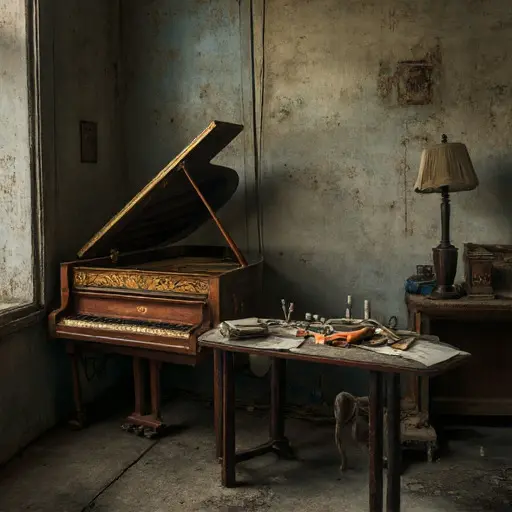
The Music Salon holds a hush shaped by halted routine, where the last penciled temperament marking on a tuning chart fades mid-column, leaving intervals unresolved. The air smells of varnished wood and old felt, the residue of careful adjustments once made daily.
Practice of Exactness
This room belonged to Otto Kraus, piano tuner (b.
1872, Vienna), trained through guild apprenticeship in tonal calibration and mechanical regulation. His notebooks record string tensions, hammer wear, and client schedules. A folded slip addressed to his daughter, Lisel Kraus, reads: “Prepare forks before morning calls,” revealing a strict rhythm: test pitch, adjust pins, damp strings, and record results with restrained precision.
Wood, Wire, and Habit
The tuning bench bears forks wrapped in cloth, numbered mutes, and a brass key worn smooth by use. Felt strips hang from pegs. A metronome rests unused near the piano leg. Each object implies repetition and restraint, a modest professional life built on accuracy rather than display. Dust has settled without disturbance, respecting the layout as if aware of its purpose.

Decline Through Noise
Later pages show corrections overwritten, margins crowded with recalculated figures. One note reads: “hall refit—metal framing,” underlined once. Concert halls began installing steel structures that altered acoustics beyond reliable manual tuning. Otto’s hearing faltered under constant strain. Clients canceled. Lisel’s errands went unanswered. Eventually, the bench remained unused. The temperament charts stayed incomplete, forks silent, strings untouched.

In the final notebook, Otto’s last entry stops mid-calculation. A penciled reminder—“confirm Lisel’s appointments”—breaks off.
No explanation accounts for his withdrawal or why the salon was never reopened.
The house remains abandoned, its piano untuned, its charts unfinished, and its temperament unresolved, holding a quiet record of exactness undone and labor left suspended without sound.