The Silent Engraving Plates of the Dupont Printmaker’s Chamber
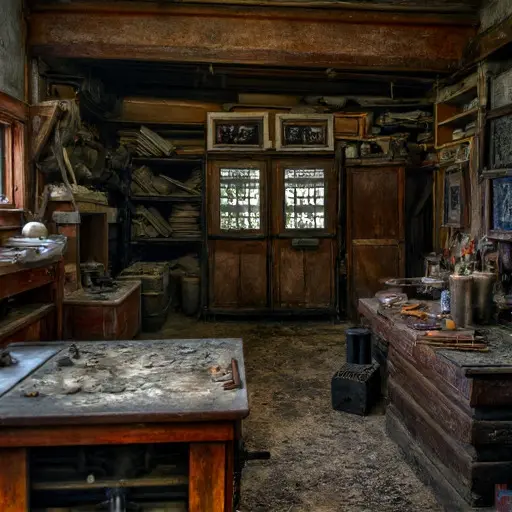
A deep, metallic stillness fills the Printmaker’s Chamber, where a penciled plate notation in a notebook halts mid-instruction, leaving etched illustrations forever incomplete.
Crafting in Copper
These implements belonged to Émile Dupont, printmaker (b. 1877, Lyon), trained in a French atelier specializing in illustrative engraving.
His notes—tiny, meticulous, and methodical—track line density, acid bath timing, and tonal shading. A folded slip referencing his assistant, Lucien Dupont, “prepare etching plates Thursday,” hints at a structured daily routine: engraving, inking, and pressing prints, interwoven with household management.
Tools and Plates
On the main press table, copper plates lie partially etched. Burnishers, scrapers, and gravers rest aligned by size. A ledger beneath folded plates records project progress, line counts, and client orders. Several partially completed prints lean against the edge of the press, edges curling, suspended mid-process as though awaiting Émile’s meticulous hand to return.

Evidence of Wear
Later ledger entries reveal repeated corrections to line etching and tonal washes. Several plates show inconsistent depth; shading is irregular. A margin note—“client dissatisfied with texture”—is smudged. Tools lie scattered, one graver slightly bent, reflecting fatigue and growing anxiety disrupting Émile’s precision. Partially etched plates remain stacked, the regular rhythm of printmaking broken.
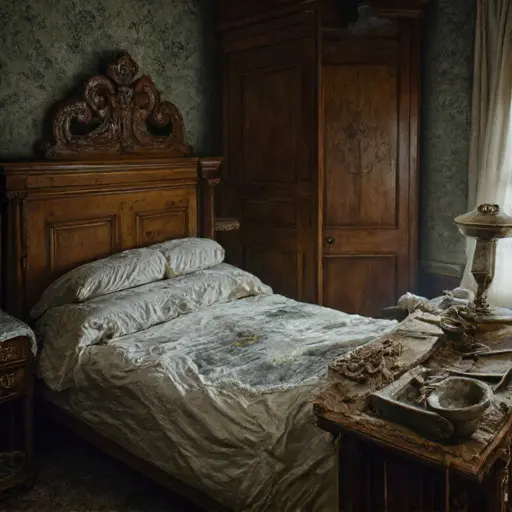
In the Chamber’s final drawer, Émile’s last plate entry trails into unfinished etchings and penciled tonal notes. A penciled note—“review with Lucien”—cuts off abruptly.
No explanation survives for why his work ceased, nor why Lucien never returned for the remaining plates.
The house remains abandoned, its presses, plates, and tools suspended in quiet anticipation, preserving the halted rhythm of printmaking that will never resume, a silent testament to meticulous labor left incomplete.