The Forgotten Loom of the Carmichael Weaver’s Chamber
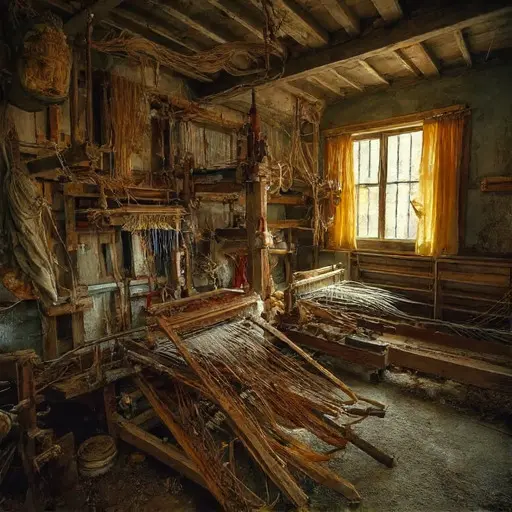
The Chamber hums with suspended rhythm. On a loom, a partially completed tapestry stops mid-pattern. Every shuttle, bobbin, and dye pot embodies precise work abruptly halted, the cadence of weaving suspended in muted stillness.
Life Woven in Threads
These implements belonged to Isobel Carmichael, weaver (b. 1881, Dundee), trained in local textile schools, skilled in tartan and woolen fabric production. Handwritten pattern books document designs, dye mixtures, and commissions for merchants. A folded note references her apprentice, Margaret Carmichael, “finish warp on Wednesday,” revealing disciplined routines of spinning, dyeing, and weaving executed daily with careful precision. Journals hint at mounting pressure from industrial competition and declining health affecting her vision and dexterity.
Instruments of Craft
Workbenches hold half-woven cloth, scattered spools, and wooden bobbins. Looms bear incomplete tartans and stripes. Isobel’s pattern books, weighed down by thread bundles, detail sequences, colors, and weave techniques. Dust settling over implements emphasizes abrupt cessation of repeated, delicate motions, silence heightened by displaced tools and abandoned threads. The partially woven tapestry becomes the focal loom, capturing halted artistry and interrupted craftsmanship frozen in mid-creation.

Threads of Decline
Later entries in pattern books reveal misaligned grid sketches, inconsistent colors, and repeated corrections. Margin notes—“Margaret to assist with warp”—smudged and smearing. Spools frayed, fibers tangled. Isobel’s failing vision subtly distorts weave symmetry. Minor dye spills stain floors, evidence of mounting frustration and compromised quality. Pressure from factory-produced fabrics forced her retreat into solitary work, leaving her craft unfinished.
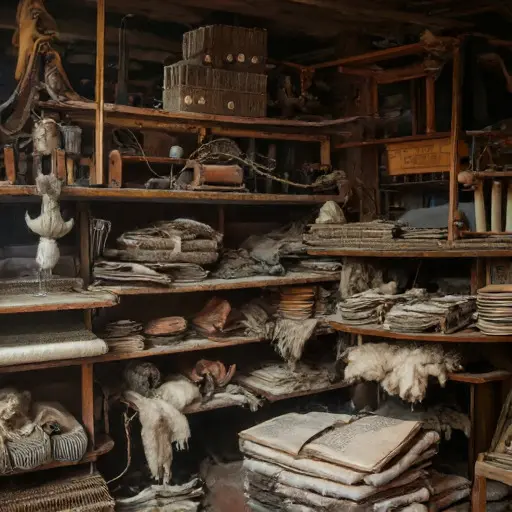
In the Chamber’s final loom, Isobel’s last tapestry ends mid-pattern, a penciled note—“check stripe alignment”—abruptly stopping.
No record explains why she abandoned her work, nor why Margaret never returned.
The weaving chamber remains abandoned, looms, spools, and dyed threads awaiting hands that will not return, the quiet heavy with unfinished artistry and lost skill.