The Forgotten Patterns of the Nakamura Weaver’s Loft
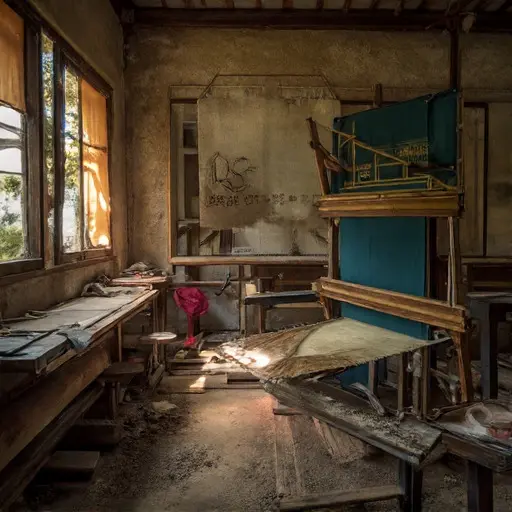
The Weaver’s Loft hums with silent labor. On a loom, penciled pattern notes trail off abruptly. Every shuttle, bobbin, and pair of scissors embodies precise effort abruptly paused, the rhythm of weaving suspended in quiet stillness.
Life Among Threads and Drafts
These implements belonged to Hiroshi Nakamura, master weaver (b. 1886, Kyoto), trained in traditional Japanese textile techniques and skilled in kimono and obi production. Ledger entries document commissioned fabrics for merchants and private patrons. A folded note references his apprentice, Keiko Nakamura, “complete floral motif Thursday,” revealing disciplined routines of drafting, dyeing, and weaving executed daily with meticulous care. Journals hint at obsessive attention to symmetry, increasing tremor, and mounting eye strain affecting pattern accuracy.
Implements of Textile Art
Looms hold partially woven fabrics and scattered tools. Shuttles, bobbins, scissors, and dye brushes lie stiff with dust. Shelves of finished textiles rest nearby. Hiroshi’s ledger, weighed down by a carved wooden shuttle, details client names, color combinations, and weave specifications. Dust settling over implements emphasizes abrupt cessation of repeated, precise gestures, silence accentuated by half-completed patterns and displaced instruments.
Signs of Waning Precision
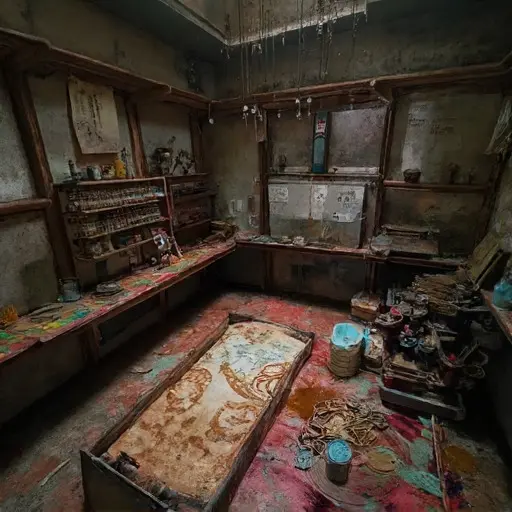
Later ledger entries reveal inconsistent pattern markings and repeated corrections. Margin notes—“Keiko questions alignment”—are smudged. Shuttles worn, threads frayed, dyes dried. Hiroshi’s declining vision and trembling hands subtly distort woven lines. Pencil notations trail off mid-instruction, quietly recording declining skill and unfinished textiles. Minor dye stains mark edges of fabrics, evidence of mounting frustration and faltering technique.
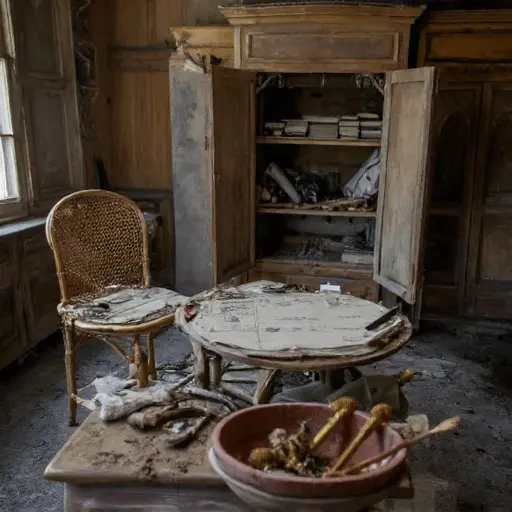
In the Loft’s final drawer, Hiroshi’s last pattern ends mid-design, a penciled note—“verify with Keiko”—abruptly stopping.
No record explains why he abandoned his work, nor why Keiko never returned.
The house remains abandoned, patterns, shuttles, and fabrics awaiting hands that will not return, the quiet heavy with unfinished craft and lost mastery.