The Lost Ledgers of the Hawthorne Apothecary’s Parlor
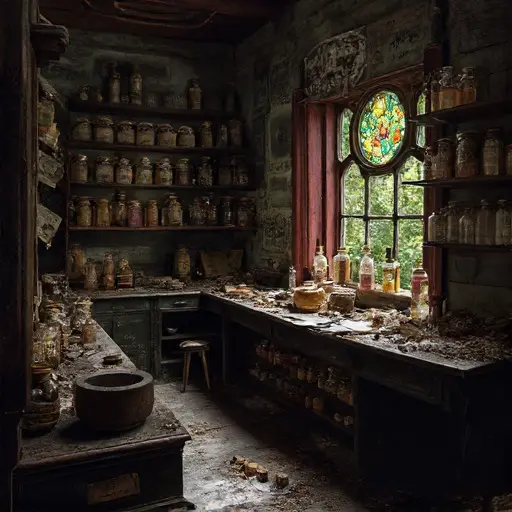
The Apothecary’s Parlor hums in suspended procedure. On the counter, penciled ledger entries for remedies trail off abruptly. Every jar, mortar, and scale embodies precise work abruptly paused, the rhythm of careful compounding suspended in quiet stillness.
Life Among Herbs and Vials
These implements belonged to Edmund Hawthorne, apothecary (b. 1877, London), trained in classical British pharmacology and skilled in medicinal herbs and tinctures. Ledger entries document prescriptions for both wealthy and local clients. A folded note references his apprentice, Thomas Hawthorne, “prepare elixir Thursday,” revealing disciplined routines of grinding, measuring, and labeling executed daily with meticulous precision.
Tools of Care
Counters hold partially measured herbs and scattered glassware. Mortars, pestles, balances, and droppers lie stiff with dust. Shelves of tinctures and powders rest nearby, labels faded. Edmund’s ledger, weighed down by a brass mortar, details client names, mixtures, and instructions. Dust settling over implements emphasizes abrupt cessation of repeated, precise gestures, silence accentuated by half-prepared remedies and displaced jars.
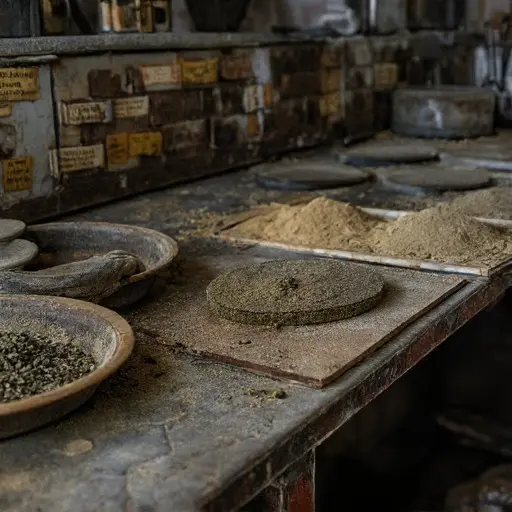
Evidence of Fading Precision
Later ledger entries reveal misaligned ledger notations and repeated corrections. Margin notes—“Thomas questions tincture potency”—are smudged. Mortars show uneven wear, droppers stained, powders caked. Edmund’s failing eyesight and tremulous hands subtly distort measurements. Pencil notations trail off mid-instruction, quietly recording declining skill and unfinished prescriptions.
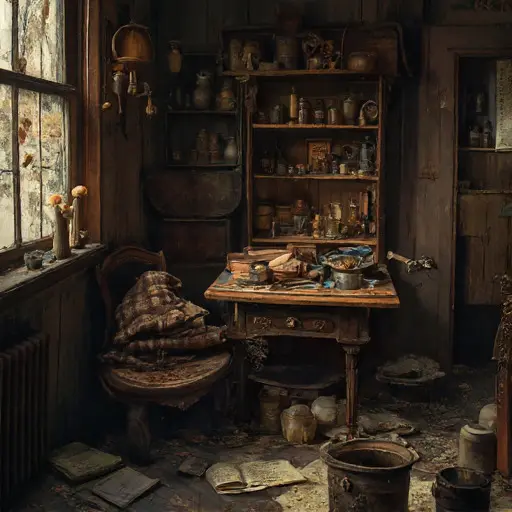
In the Parlor’s final drawer, Edmund’s last prescription ends mid-ledger, a penciled note—“verify with Thomas”—abruptly stopping.
No record explains why he abandoned his work, nor why Thomas never returned.
The house remains abandoned, herbs, vials, and tools awaiting hands that will not return, the quiet heavy with unfinished alchemy and lost mastery.