The Forgotten Dial of the Petrov Clockmaker’s Room
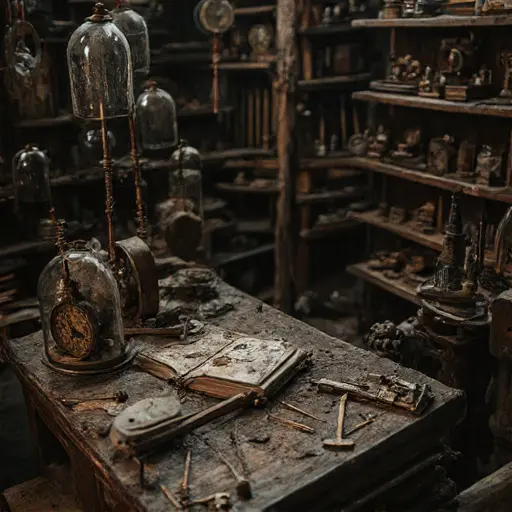
The Clockmaker’s Room holds a hush of unfinished time. On a bench, penciled escapement notations for a tower clock trail off mid-step. Every gear, pendulum, and tool reflects meticulous labor abruptly paused, the rhythm of turning wheels frozen in stillness.
Life in Gears and Time
These tools belonged to Ivan Petrov, clockmaker (b. 1876, St. Petersburg), trained in Russian horological workshops and skilled in both tower and domestic timepieces. Ledger entries reveal commissions from city churches and wealthy merchants. A folded note references his apprentice, Nikolai Petrov, “deliver turret clock Friday,” reflecting a strict daily routine of measuring, assembling, and testing with careful precision.
Implements of Horology
Workbenches hold partially assembled clocks and scattered gears. Tweezers, screwdrivers, and oilers lie stiff with hardened lubricants. Clock faces and dials rest atop polishing cloths. Ivan’s ledger, under a brass weight, details client names, clock specifications, and deadlines. Dust settling over instruments emphasizes the sudden cessation of repeated, exacting motions, the room echoing absence with the weight of frozen mechanism.
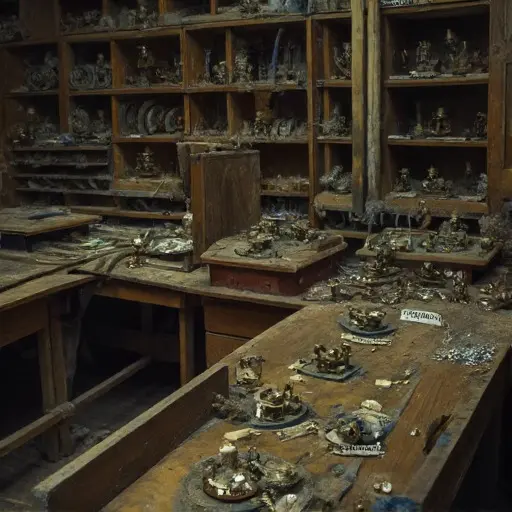
Evidence of Failing Precision
Later ledger entries show misaligned escapement diagrams and repeated corrections. Margin notes—“Nikolai questions pendulum balance”—are smudged. Tweezers and screwdrivers show uneven wear, gears bent. Ivan’s failing eyesight and hand tremor subtly distort his work. Pencil notations trail off mid-diagram, quietly recording declining skill and uncompleted horology.
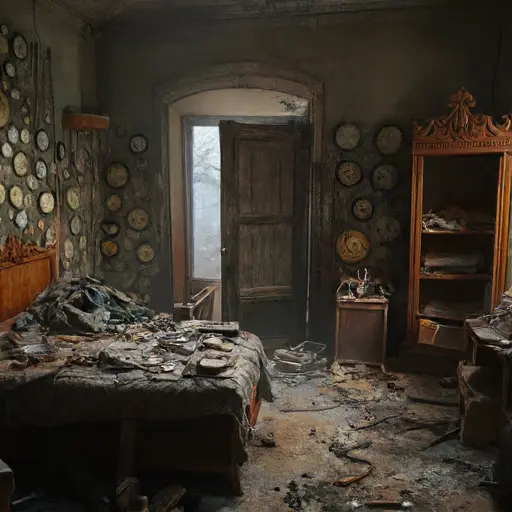
In the Room’s final drawer, Ivan’s last clock ends mid-escapement, a penciled note—“verify with Nikolai”—abruptly stopping.
No record explains why he abandoned his work, nor why Nikolai never returned.
The house remains abandoned, clocks, tools, and gears awaiting hands that will not return, the quiet heavy with unfinished precision and lost mastery.