The Haunting Shadows of the Kovalenko Lantern Workshop

The Lantern Workshop hums with suspended precision. On a workbench, penciled pane markings for a decorative lantern stop mid-step. Every tool, frame, and glass sheet hints at disciplined labor left abruptly unfinished, the ritual of assembly frozen in quiet anticipation.
Life in Glass and Copper
These implements belonged to Mikhail Kovalenko, lantern maker (b. 1875, Kyiv), trained in Ukrainian and Russian workshops. Ledger entries show commissions from merchant families and small churches. A folded note references his apprentice, Sofia Kovalenko, “deliver copper lantern Friday,” indicating a regimented daily routine of cutting, soldering, and polishing.
Implements of Illumination
Benches display partially assembled lanterns and scattered glass panes. Tin snips, hammers, and soldering tools lie among copper frames. Small oil lamps and polishing cloths sit nearby. Mikhail’s ledger, beneath a glass weight, records client names, designs, and deadlines. Dust settling over tools and frames highlights the sudden cessation of repeated, precise motions.

Signs of Waning Dexterity
Later ledger entries reveal misaligned pane placements and repeated corrections. Margin notes—“Sofia questions solder joint”—are smudged. Soldering irons show uneven wear, copper edges slightly bent. Mikhail’s trembling hands and fading eyesight subtly distort his precision. Pencil notations trail off mid-instruction, documenting gradual decline in careful technique.
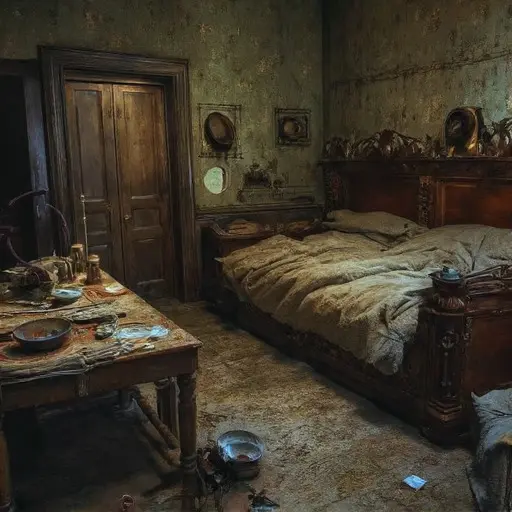
In the Workshop’s final drawer, Mikhail’s last lantern ends mid-frame, pane markings fading into silence. A penciled note—“verify with Sofia”—abruptly stops.
No record clarifies why he abandoned his work, nor why Sofia never returned.
The house remains abandoned, lanterns, tools, and glass awaiting hands that will not return, the quiet heavy with incomplete illumination and lost mastery.