The Eerie Dialects of the Petrov Calligraphy Chamber
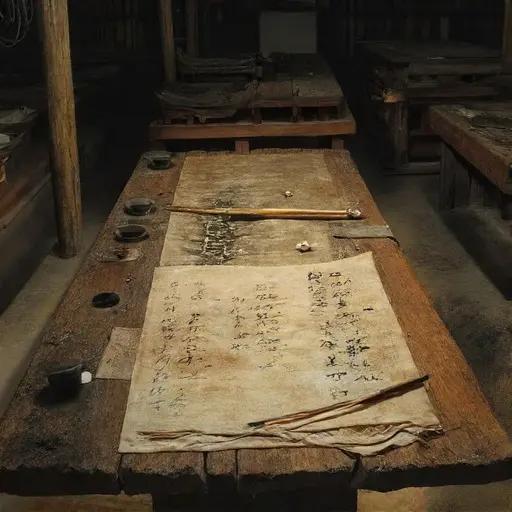
The Calligraphy Chamber is filled with a hushed, contemplative stillness. On a table, penciled stroke instructions for a ceremonial manuscript trail off unfinished. Each brush, inkstone, and scroll suggests a disciplined routine interrupted, the air heavy with quiet anticipation.
Life in Ink
These implements belonged to Anatoly Petrov, calligrapher (b. 1871, St. Petersburg), trained in Russian and Eastern Orthodox manuscript techniques. Ledger entries reveal commissions for church icons and noble families. A folded note mentions his assistant, Irina Petrov, “deliver manuscript Friday,” showing his precise schedule of sketching, inking, and reviewing character forms.
Implements and Rituals
Scrolls are arranged by type and script, some half-inked. Brushes rest on stands, some bristles bent. Inkstones, partially filled with hardened black pigment, sit beside paperweights shaped like carved animals. Anatoly’s ledger lies beneath a blotting cloth, detailing client names, scripts, and intended use. Dust gathers over every item, accentuating the sudden halt of repeated, patient gestures.
Signs of Eroding Skill
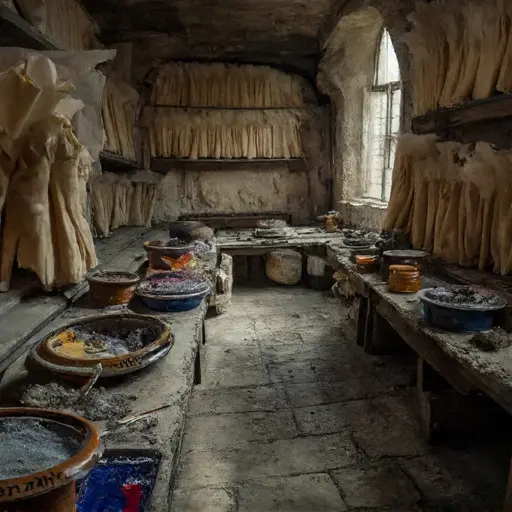
Later ledger entries show inconsistencies in stroke length and curvature. Margin notes—“Irina questions alignment”—are smudged beyond legibility. Brushes display uneven wear, some bristles broken. Scrolls reveal hesitations in ink density. Anatoly’s failing eyesight and trembling hands subtly mar repeated strokes, with notes ending abruptly, reflecting the decline of once-assured mastery.
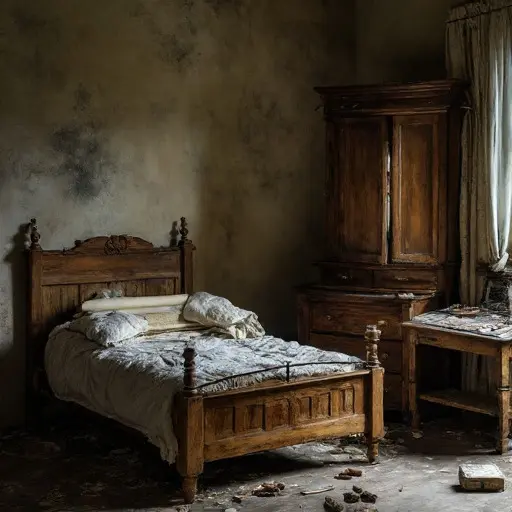
In the Chamber’s final drawer, Anatoly’s last scroll ends mid-character, stroke markings fading into silence. A penciled note—“confirm with Irina”—cuts off abruptly.
No record clarifies why he abandoned his craft, nor why Irina never returned.
The house remains abandoned, scrolls, brushes, and inkstones waiting in stillness, the quiet heavy with unfinished artistry.