The Forgotten Stencils of the Nakamura Silk Workshop
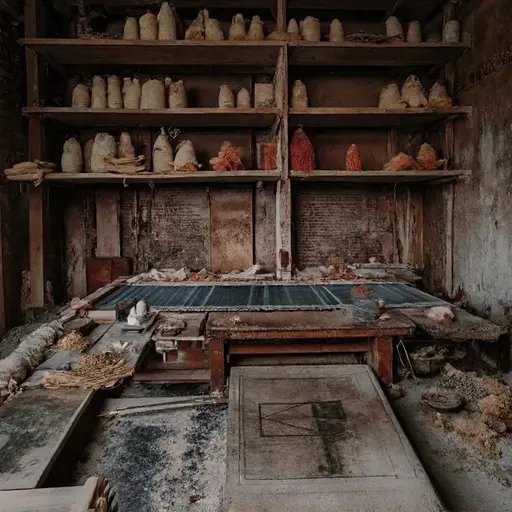
The Silk Workshop carries a suspended hush. On a table, penciled weft lines mark thread placement for a ceremonial kimono, left incomplete. Each loom, stencil, and dye tray evokes work paused mid-process, a quiet testament to abandoned precision.
Threads of a Life
These tools belonged to Akiko Nakamura, silk stencil artist (b. 1879, Kyoto), trained in traditional kimono workshops and familiar with Edo-era resist techniques. Ledger entries show commissions for local merchants and ceremonial garments. A small folded note references her niece, Yumi Nakamura, “deliver panel Tuesday,” revealing a disciplined daily practice of stretching, stenciling, dyeing, and drying silk panels.
Implements and Method
Looms are threaded with partially dyed silk. Stencils, some damp and curling, rest atop trays of dried pigments. Brushes show residue of past work, stiff and unwashed. Akiko’s ledger, placed under a weighted block, lists client names, color combinations, and drying sequences. Silk fibers scattered across the floor indicate repetitive hand movements now abruptly ceased, leaving the craft’s rhythm suspended.
Signs of Waning Mastery
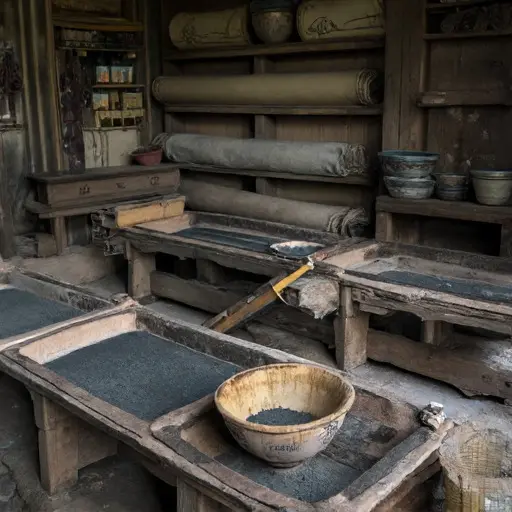
Later ledger entries reveal uneven weft lines and smudged dye notations. Some silk panels display inconsistent color saturation. Margin notes—“Yumi questions tension”—are partially obliterated. Brushes show frayed bristles, stencil edges split, and pigment tubs dried unevenly, signaling fatigue and failing eyesight disrupting precision. Measurements trail off mid-instruction, a quiet record of declining skill.
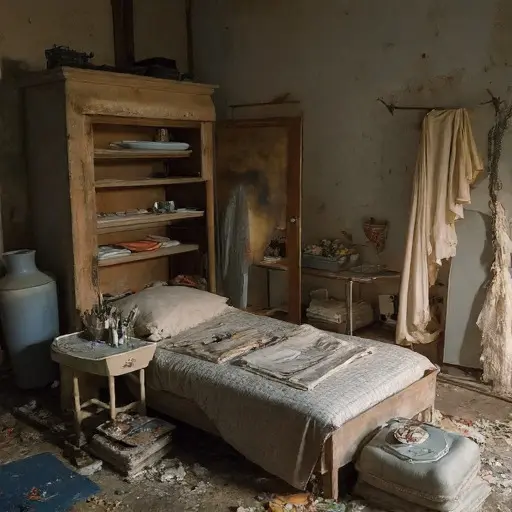
In the Workshop’s final drawer, Akiko’s last panel ends mid-dye, weft markings trailing into silence. A penciled note—“confirm with Yumi”—stops abruptly.
No record explains why she abandoned her work, nor why Yumi never returned.
The house remains abandoned, silks, stencils, and brushes awaiting hands that will not return, the quiet heavy with unfinished mastery.