The Hidden Blueprints of the Moretti Engraving Chamber
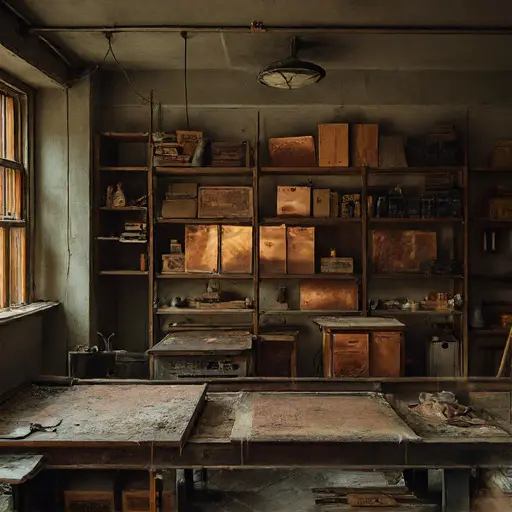
The Engraving Chamber holds a hushed, metallic stillness. On a desk, penciled notations mark etching lines, unfinished. Each tool and plate implies disciplined practice halted, leaving the craft preserved in deliberate quiet.
Crafting in Metal
These tools belonged to Lorenzo Moretti, engraver (b. 1872, Milan), trained in Renaissance-inspired workshops. His annotations—neat and angular—detail commissions for private collectors. A small folded note mentions his apprentice, Giulia Moretti, “collect finished plate Monday,” indicating a routine of precision engraving, careful inking, and measured polishing.
Instruments of the Art
Copper plates are arranged by size and subject, some partially etched. Burins and scrapers rest in ordered trays, some streaked with dark residue. Ink pots are dried but positioned for frequent use. Lorenzo’s ledger, beneath a protective blotter, shows commissions, dates, and client names. Plates on stands bear fingerprints where adjustments were last made, each signifying careful, paused work, every mark telling of dedication suddenly stopped.
Signs of Declining Precision
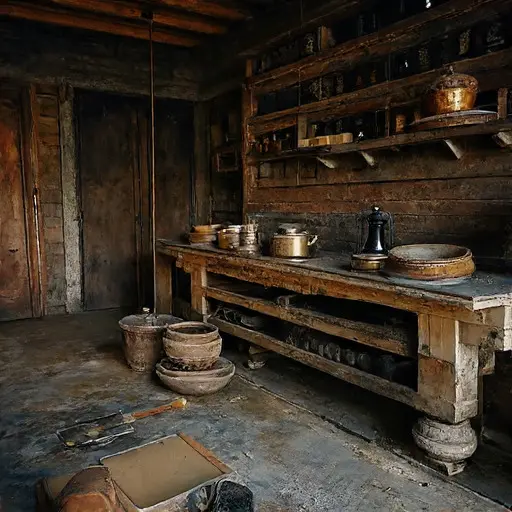
Later ledger entries reveal etched lines corrected and retraced multiple times. Some plates show uneven depth where Lorenzo’s eyesight failed. A margin note—“Giulia questions shadowing”—is smudged. Burnishers are nicked, burins worn unevenly, subtle evidence of strain. Notations for a final portrait plate trail off, hesitant and wavering, leaving the intended form unresolved.
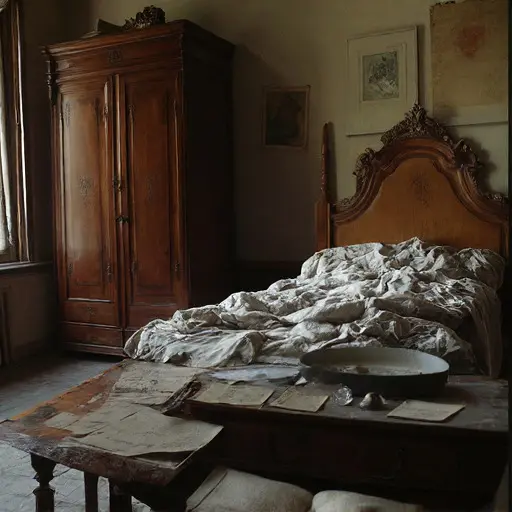
In the Chamber’s final drawer, Lorenzo’s last plate ends mid-etch, etch markings trailing into silence. A penciled note—“confirm with Giulia”—stops abruptly.
No record clarifies why he abandoned his craft, nor why Giulia never returned.
The house remains abandoned, copper plates and tools waiting in stillness, precision suspended indefinitely, echoing the absence of the master who once held them in hand.