The Haunting Drafts of the Kwon Papermaker’s Loft
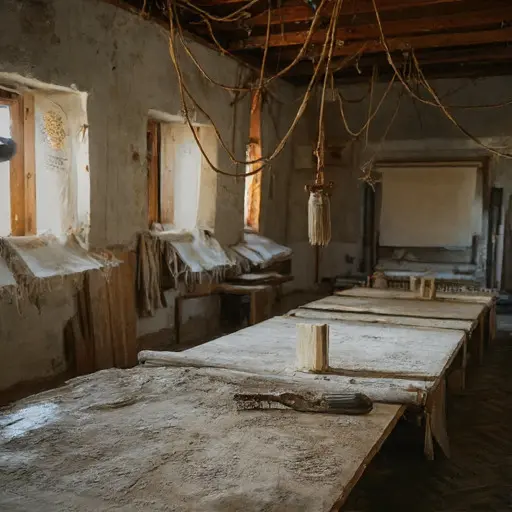
The Papermaker’s Loft holds a faint, tactile hush. On a table, a penciled note marks the grain of sheets for a batch, unfinished. Every tool and stack of paper reflects a rhythm of careful work suddenly abandoned.
Crafting the Sheets
These implements belonged to Hye-Jin Kwon, papermaker (b. 1875, Jeonju), trained in traditional hanji workshops. Her notes, delicate and precise, record batches for temple commissions and local scribes. A folded slip mentions her brother, Min-Soo Kwon, “deliver prints Wednesday,” revealing a methodical daily routine of soaking, pressing, and drying, followed by careful inspection.
Tools and Technique
Deckles rest stacked with wet pulp still stiffening. Bamboo brushes and spatulas lie alongside partially formed sheets. Wooden tongs, used for lifting wet paper, are dusted and idle. A ledger under a linen cloth tracks commissions, batch counts, and drying times. Edges of sheets curl faintly from uneven humidity, showing a craft disrupted mid-process.
Signs of Waning Precision
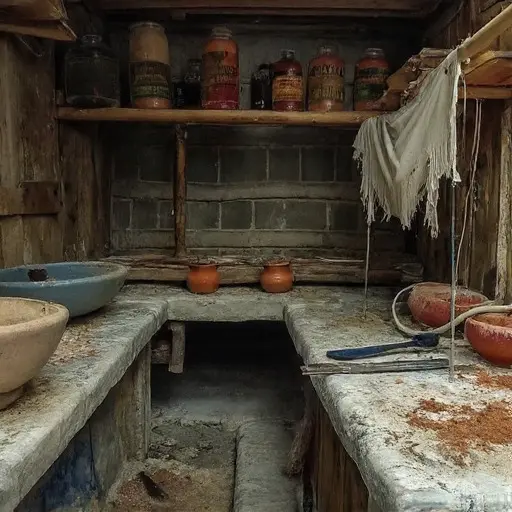
Later entries in Hye-Jin’s ledger show inconsistent sheet thicknesses and partially corrected watermarks. Several sheets display uneven fibers, subtle yet telling. Margin notes—“Min-Soo questions opacity”—are smudged. One mould shows splintering, another warped by overuse, signaling her weakening strength. Penciled guides on drying sequences wobble, implying indecision where once exact.
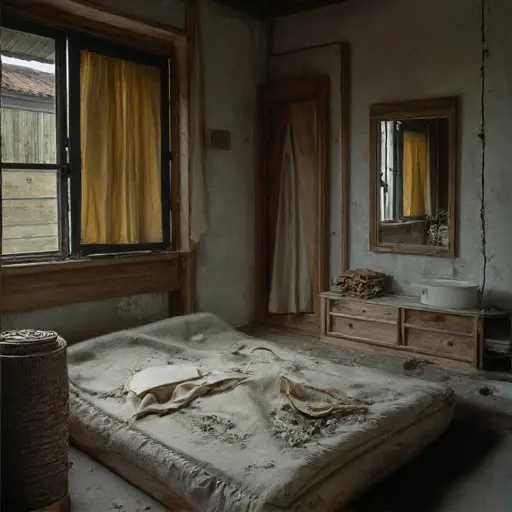
In the Loft’s final drawer, Hye-Jin’s last sheet stops mid-mark, grain lines trailing into silence. A penciled note—“verify with Min-Soo”—cuts off.
No documentation clarifies why she abandoned her work, nor why Min-Soo never collected the sheets.
The house remains abandoned, the pulp stiff and quiet, awaiting hands that will not return.