The Eerie Scorebooks of the Lindström Music Conservatory
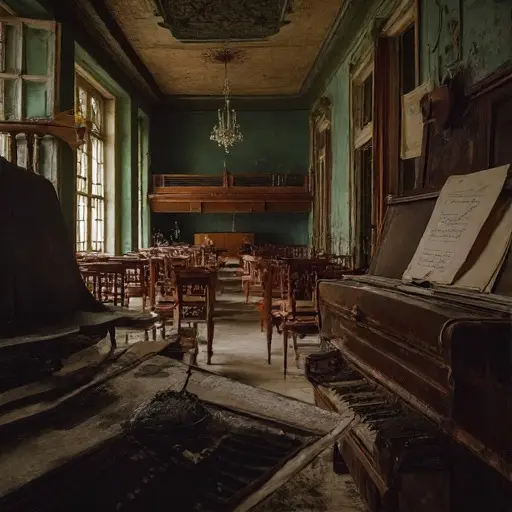
The Music Conservatory carries a careful hush. On the grand piano, a penciled note marks tempo adjustments, unfinished. Every instrument and manuscript suggests a routine paused, not abandoned in haste but left mid-study.
Life in Harmonies
These implements belonged to Sven Lindström, composer and music instructor (b. 1873, Stockholm), trained in local conservatories and exposed to Germanic symphonic traditions. Ledger entries show meticulous scheduling of student lessons. A small folded slip mentions his niece, Karin Lindström, “deliver concerto sketches Friday,” reflecting a disciplined rhythm of composition, rehearsal, and teaching.
Tools of the Study
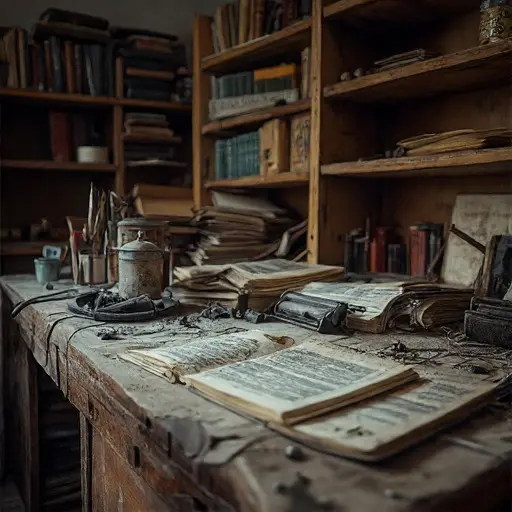
Music stands are lined with scores of sonatas, concertos, and etudes, edges curling from frequent handling. Pencils and quills are arranged by hardness. A harpsichord shows fingerprints in the dust where hands frequently pressed keys. Sheet music in cupboards bears annotations in Swedish, documenting practice times and adjustments in tempo.
Signs of Fractured Rhythm
Later ledger entries show corrections overwritten, dynamics shifted repeatedly, and staccato markings misaligned. A note—“student questions rhythm”—is smudged beyond legibility. Fingernail marks on a keyboard indicate growing frustration. The final concerto draft is uneven, fingerings mismatched, suggesting Sven’s failing eyesight and increasing tremor disrupted his precision.
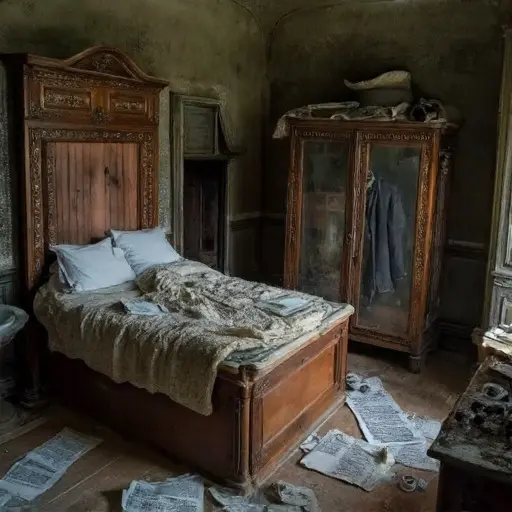
In the conservatory’s final drawer, Sven’s last score ends mid-phrase, tempo markings fading into uncertainty. A penciled note—“confirm with Karin”—stops abruptly.
No documentation explains his sudden withdrawal or why Karin never collected the sketches.
The house remains abandoned, instruments silent, and the echoes of unfinished music lingering in the still air indefinitely.