The Hidden Ledger of the Morozov Tapestry Studio
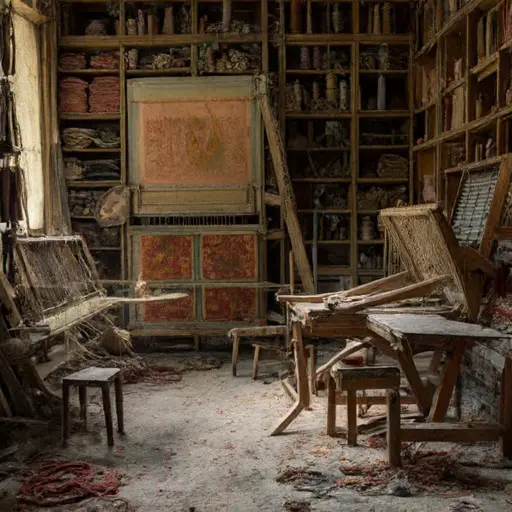
The Tapestry Studio is filled with a muted, fibrous hush. On a worktable, a penciled note marks thread counts and warp sequences, trailing off mid-calculation. The air carries faint dye scents mingled with the weight of abandoned labor.
Life Woven in Threads
These tools belonged to Anastasia Morozov, tapestry weaver (b. 1870, St. Petersburg), trained in the artisan guilds near the Neva River. Her handwriting, precise and slanted, details commissions for affluent households. A small folded note references her cousin, Vera Morozov, “collect panel Monday,” revealing a patient daily routine of measuring, threading, and cross-stitching long hours into evening silence.
The Rhythm of Weaving
Looms are strung with partially completed patterns, threads taut but unfinished. Spools of dyed wool rest neatly in racks, yet some are uncapped and slightly unraveled. A set of weaving needles, dulled by frequent use, lies alongside scraps of velvet and silk. Anastasia’s ledger, placed beneath a protective cloth, shows orderly columns of client names and deadlines.

Faltering Craft
Later ledger entries reveal uncertainty: thread counts crossed out, patterns partially corrected, some sketches overwritten. Several panels display misaligned designs where Anastasia may have forced progress despite fatigue. Margin notes—“Vera complains alignment”—are smudged. A pair of scissors rests with a dulled blade; a bobbin shows fraying fibers, subtle signs of a craftsman’s slow unraveling.
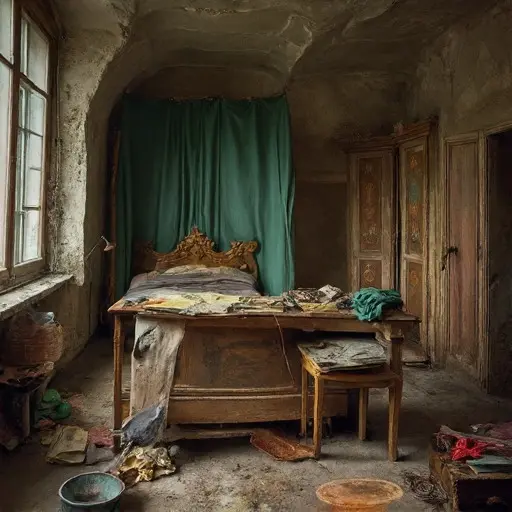
In the final drawer of the Tapestry Studio, Anastasia’s last ledger page trails off, warp and weft instructions incomplete. A penciled note—“verify with Vera”—cuts abruptly.
No record explains why she abandoned her work, nor why Vera never collected the panels.
The house remains abandoned, the looms taut yet silent, threads waiting for hands that will not return.