The Silent Alterations of the Hargreaves Millinery Room
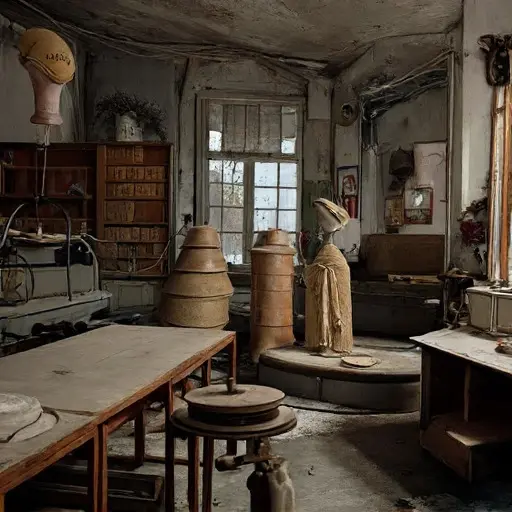
The house keeps a restrained quiet inside the Millinery Room, where the word brim is penciled lightly beside a pattern note, already smudged by repeated handling. The air smells faintly of steamed felt and lavender sachets, the sort used to calm cloth and nerves alike. Nothing here suggests haste or theft—only a pause that lengthened into absence.
A Trade Shaped by Brim and Balance
The tools belonged to Agnes Hargreaves, milliner (b. 1864, Bath), trained through apprenticeship and careful observation. Her education was practical, her habits exact. Notes pinned above the table list orders for mourning hats and travel bonnets. A card mentions her niece, Clara Hargreaves, “deliver navy ribbon Tuesday,” implying a dependable routine of fittings, steaming, stitching, and quiet evenings correcting seams.
Habits of the Hand
Hat blocks are marked in graphite with client initials. Boxes of jet beads and velvet remnants are labeled in a neat, slanted hand. A narrow ledger records payments promptly received. Agnes’s temperament shows in the even spacing of pins and the gentle wear on her shears.
Where the Work Began to Falter
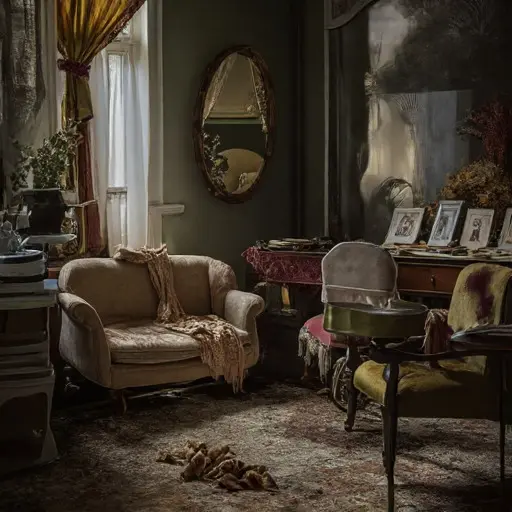
Later entries in Agnes’s ledger show corrections overwriting earlier measurements. Several hats display uneven curves, subtle but persistent. A note—“client returned fit unsatisfactory”—is crossed through twice. Magnifying spectacles lie broken in a drawer, one lens cracked. The chalk lines on newer patterns waver, as though her sight strained to judge edges once trusted instinctively.
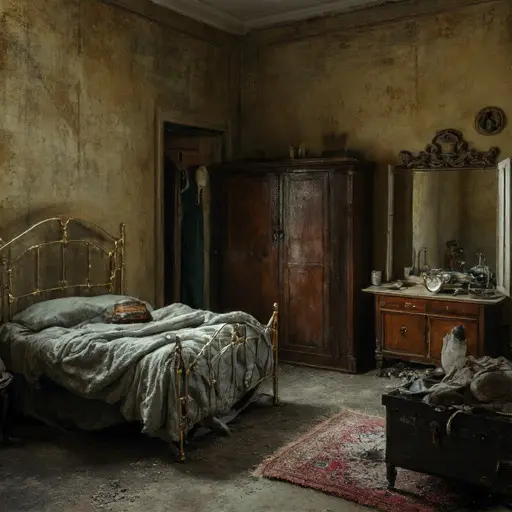
In the final drawer of the Millinery Room, Agnes’s last pattern stops short, measurements trailing into indecision. A penciled reminder—“ask Clara to check”—ends mid-line.
No letter explains her withdrawal, nor why Clara never returned for the ribbons.
The house remains abandoned, its altered hats waiting for a steadiness of hand that did not come back.