The Eerie Etching Bench of the Novák Glass Studio
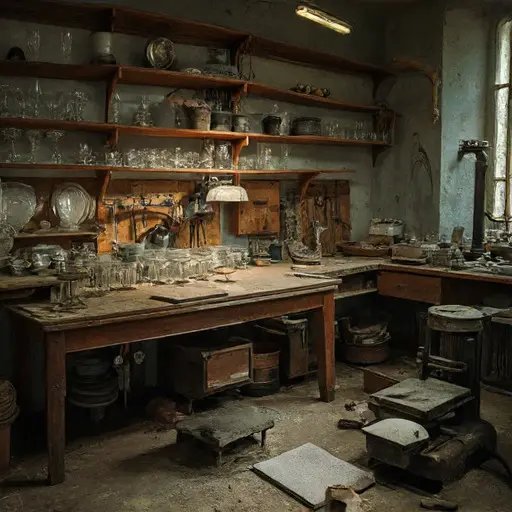
The Glass Studio holds a thin, mineral hush. Early in the room, the word tolerance appears penciled on a slip within the first scattering of notes, a reminder of margins that once governed every cut. The bench lamp is trimmed but unlit; the routine seems paused rather than ended.
Tolerance in the Cut
The tools belonged to Milan Novák, glass engraver (b. 1871, Jablonec), trained through a regional workshop tradition. His education was practical, his manner exacting. Chalk marks on the bench outline daily sequences—wheel, rinse, check—while a folded note names his wife, Alena Novák, “bring supper at eight,” hinting at a calm domestic rhythm supporting long hours of fine work.
The Hand and the Wheel
Copper wheels are arranged by diameter, their edges thinned by years of use. A ledger records commissions for stemware and presentation bowls, entries steady and spare. Linen cloths bear faint arcs where Milan tested pressure. The magnifier’s strap is repaired twice, carefully, as if sight mattered above all.
Where Precision Slipped
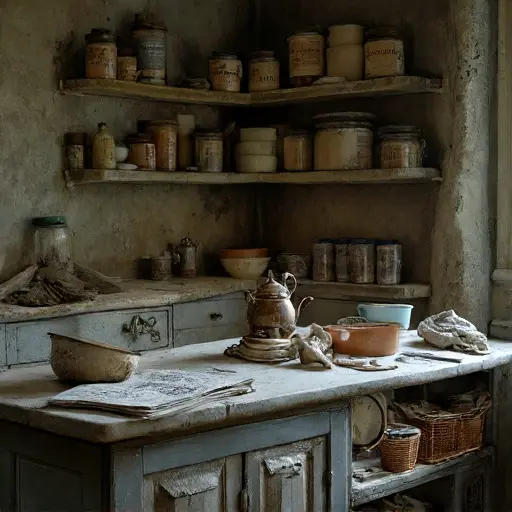
Later pages of the ledger show hesitation: depths corrected, then crossed out. Several goblets display uneven frosting at the rim, subtle but undeniable. A clipped note—“client questions uniformity”—is tucked beneath a paperweight. The visor lenses show scratches where they were cleaned too often, too roughly, as if clarity were failing.
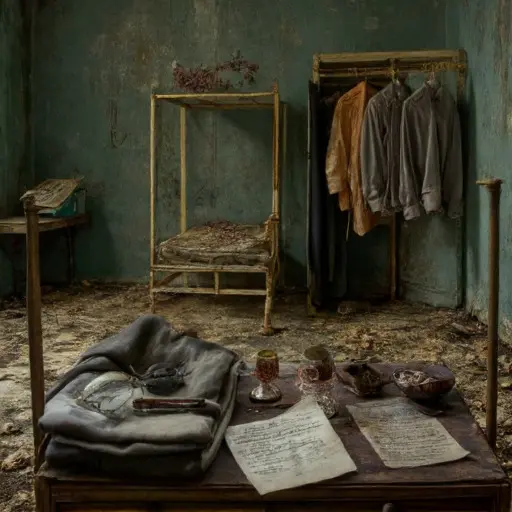
In the Studio’s final drawer, Milan’s last pattern ends mid-curve, the margin notes thinning into silence. A penciled line—“recheck depth tomorrow”—stops short.
No paper explains why the bench went cold, nor why Alena’s suppers ceased to arrive.
The house keeps its abandonment, glass waiting for hands that will not risk another cut.