The Lost Calibration Sheets of the Schneider Horology Attic
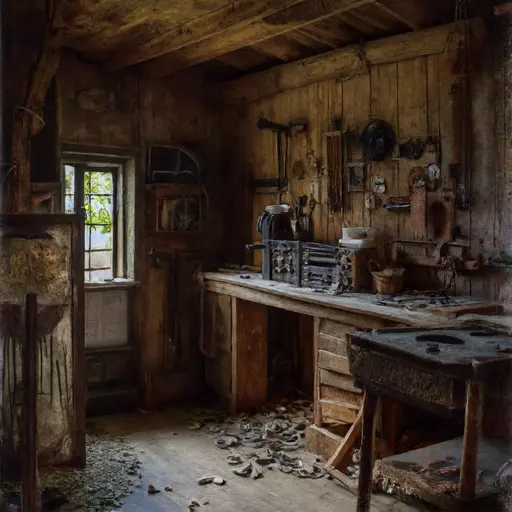
Muted air lingers in the Horology Attic, where a smudged note shows a half-finished timing ratio scribbled beside a disassembled verge. Nothing is broken outright, yet everything hints at calculations paused at a critical moment.
A Craftsman’s Cadence
These tools belonged to Johann Schneider, clock regulator (b.
1872, Freiburg), trained under a modest guild master. His German annotations—precise, economical—chart minute corrections for local merchants’ mantel clocks. A folded slip naming his brother, Matthias Schneider, “return repaired bracket clock,” suggests a predictable rhythm of work balancing family ties and meticulous adjustments.
The Attic as His Workshop
Along a trestle bench, powdered rouge rests in a small ceramic dish. A weighted timing fork lies beside a ledger of service intervals. Drawer inserts hold neatly filed pallets and pinions, each wrapped in linen. A tall-case pendulum, removed for cleaning, leans upright with habitual care, its brass bob dulled but centered.

A Subtle Unraveling
Later pages of Johann’s ledger reveal crossed-out corrections: intervals rewritten twice, then abandoned. Several escapement wheels on a side tray bear faint scratches inconsistent with his careful habit. A margin note—“client disputed lateness”—is smudged nearly unreadable. One verge is filed too thin, as though he forced a correction while uncertain of his measurements.
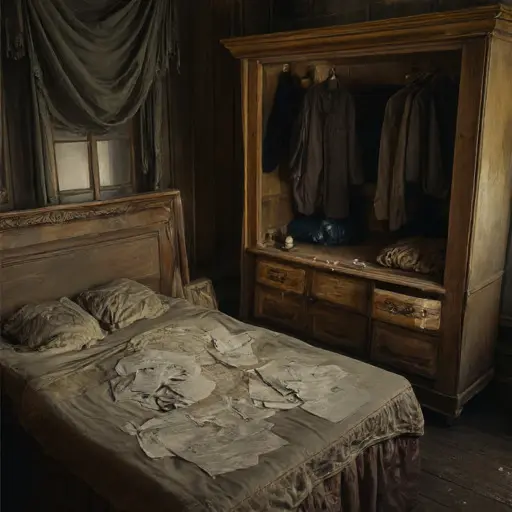
In the Attic’s final drawer, Johann’s calibration sheet ends abruptly, ratios trailing into faint arithmetic. A penciled reminder—“confirm with Matthias”—stops mid-stroke.
No record clarifies why his timing faltered or why Matthias never returned for the bracket clock.
The house holds its abandonment without protest, its halted rhythms suspended in the thinning quiet.