The Forgotten Varnish Schedules of the Delorme Finishing Room
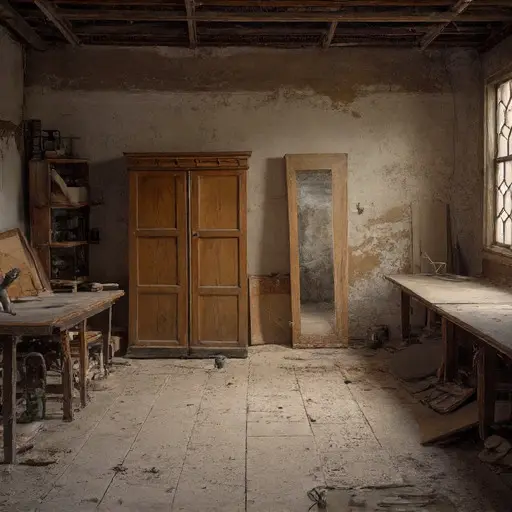
A dense quiet holds the Finishing Room, where a folded cloth lies stiff with dried varnish. A slip of paper beneath it lists measurements for a parquet panel, ending mid-sentence.
Reading the Grain of a Life
These tools and papers belonged to Étienne Delorme, ébéniste (b.
1875, Lyon), trained informally under a neighborhood master. His jotted French notes—compact and sparing—track commissions for middle-class parlors. A penciled reminder concerning his sister, Renée Delorme, “her cabinet hinges Thursday,” hints at a steady, dutiful temperament moving through days of sanding, varnishing, and quiet recalibration.
Work Shaped in Patient Layers
On the main bench rests a set of fine scrapers, each wrapped in linen. A box of pumice sits near a half-prepared cabinet door, its edges smoothed with practiced moderation. A ledger tucked under a clamp records fees and delivery dates in stable, narrow figures, reflecting Étienne’s measured approach to finishing work.
Where His Method Began to Slip
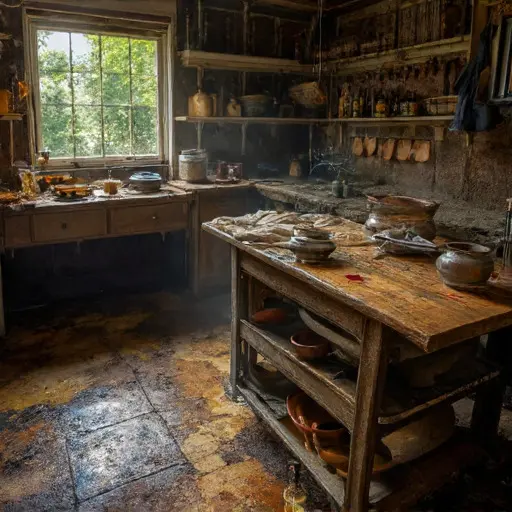
Later entries in Étienne’s ledger waver. Costs are crossed out twice; notes on color layering contradict the earlier ones. Several cabinet panels on the side table show blotched absorption, as if he pressed forward while uncertain of his mixtures. A cabinet foot, stained unevenly, rests beside a tin labeled “essai,” suggesting tests abandoned before conclusions could form.
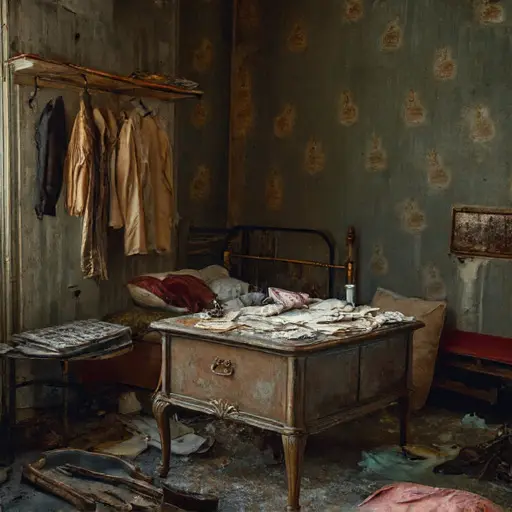
In the Finishing Room’s last drawer, an unfinished varnish schedule ends abruptly, layers unnamed and strokes unassigned. A penciled note—“revise after speaking with Renée”—trails into silence.
No ledger or letter explains why his concentration failed, nor why Renée never came for her hinges.
The house, given to abandonment, keeps its dulled surfaces and quiet tools awaiting hands that will not return.