The Silent Thread Counts of the Kovács Tapestry Room
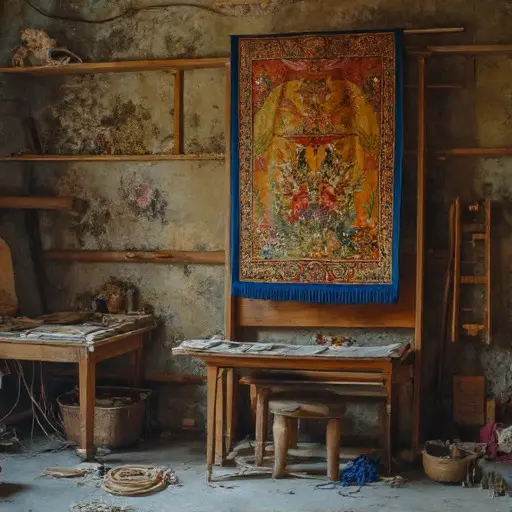
A dry hush hangs in the Tapestry Room, where a spool of wool sits tilted in a shallow bowl. A penciled request for border repair ends abruptly beside a folded calico scrap.
The Artisan’s Daily Rhythm
These tools belonged to Ilona Kovács, textile restorer (b.
1878, Sopron), trained quietly under a provincial embroiderer. Her notes—Hungarian abbreviations steady and small—list repairs for gentry households. A slip referencing her mother, Eszter Kovács, “send finished edging Friday,” hints at a routine governed by careful pacing, brewing dyes, and deliberating over stitch density.
Materials Under Her Hand
Bundles of merino wool sit arranged by fading scale, and a narrow chest holds intricately patterned fragments awaiting reweaving. The main frame displays a half-mended tear, its threads lightly couched. A waxed linen cord, coiled with intention, lies beside a ledger recording commissions completed in immaculate columns.
Drift Toward Disorder
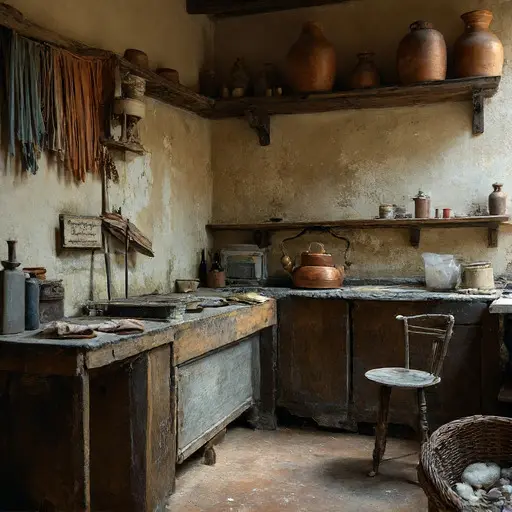
In later sections of Ilona’s ledger, rows slant, numbers overwritten. Several border samples, once crisp, show irregular tension. A note—“client questioned authenticity”—is folded into an empty dye packet. On the main frame, shims once used for consistent tautness are misaligned, some wedged too tightly, others nearly loose.
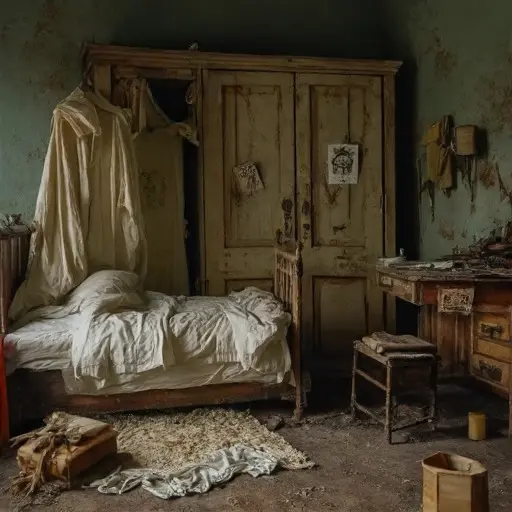
Inside the final drawer of the Tapestry Room, Ilona’s test swatch is stitched only in outline, color decisions abandoned. A penciled margin—“resolve tension tomorrow”—trails off mid-word.
No record clarifies her sudden relinquishment of tools or why Eszter never collected the finished edging.
The house remains surrendered to abandonment, woven intentions left unraveling in stillness.