The Eerie Ledger Fragments of the Roncevic Binding Room
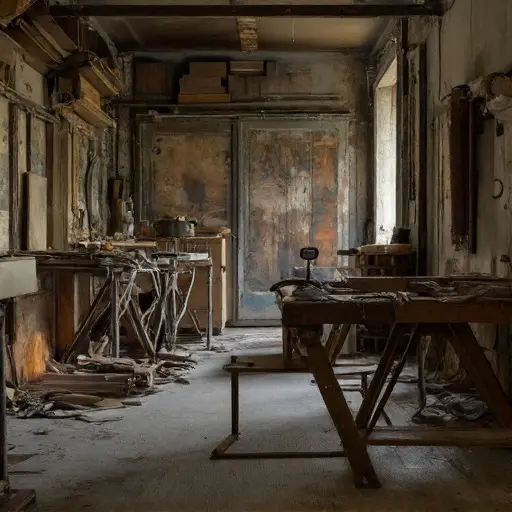
A muted hush lies over the Binding Room, where a scatter of pastedowns surrounds a misplaced awl. Near the sewing frame, a coil of fiber threads remains looped mid-knot, marking a labor interrupted without explanation.
Origins of a Bookbinder
These materials belonged to Marko Roncevic, bookbinder (b.
1871, Dubrovnik), trained under a portside artisan yet serving modest patrons. His penciled notations—Croatian abbreviations small and tidy—list repairs for hymnals and merchant ledgers. A brief mention of his niece, Ana Roncevic, “collect payment Friday,” hints at gentle dependability woven into his routine.
Techniques Set with Care
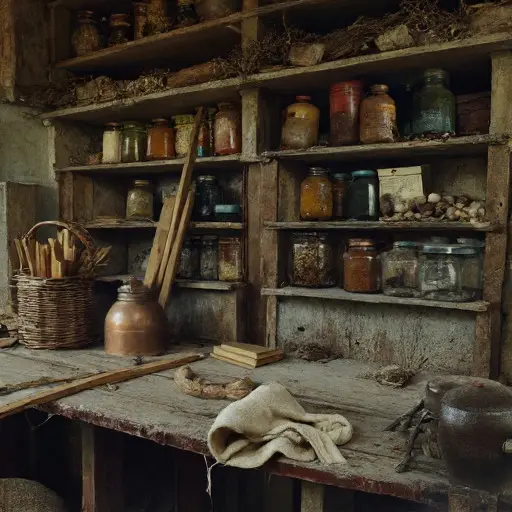
On the main bench, paring knives lie sheathed beside neatly reamed quires. A tin of pigments—umber, malachite—speaks to restrained ornamentation. Leather scraps reveal disciplined skiving strokes, each nearly translucent. In a shallow drawer, Marko’s ledger records bindings completed with unvarying precision.
Shifts in His Working Rhythm
Later folios in Marko’s ledger begin to falter. Regular entries break into hesitant strokes; measurements contradict his earlier method. Some bindings are marked “redo,” underscored twice. A stack of uncut boards, warped at their corners, suggests doubts gathering faster than he could correct them.
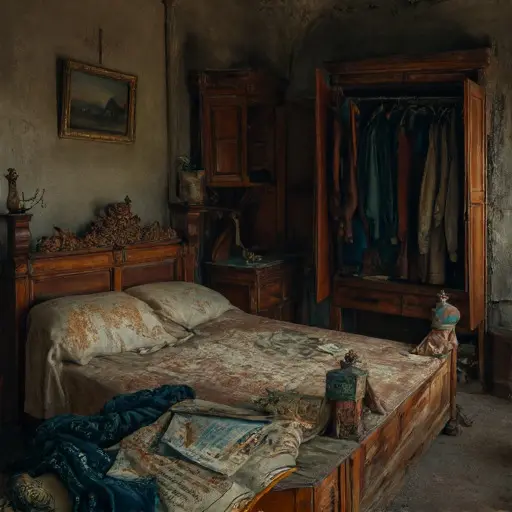
In the Binding Room’s final drawer, Marko’s last project remains half-backed: spine linings clipped short, kettle stitches wavering. A margin note—“delay explained soon”—ends abruptly.
No account settles what pressed upon him, nor why Ana’s errands ceased without response.
The house, long given to abandonment, holds its quiet signatures, waiting for hands that will not resume their careful work.