The Silent Formulary of the Gradinariu Apothecary Room
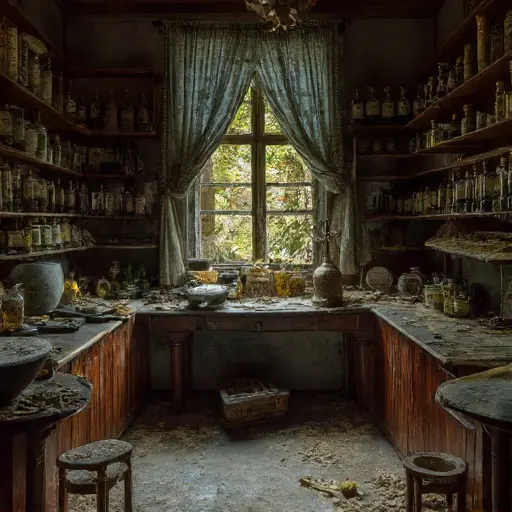
Muted light settles over the Apothecary Room, where a small ledger remains open beside a pestle stained umber. The entries halt mid-line, as though the writer paused merely to fetch a tincture before vanishing into another task.
Foundations of Craft
The tools and tincture notes belonged to Nicolae Gradinariu, apothecary (b.
1868, Sibiu), educated by a provincial chemist but serving a modest clientele. His handwriting—precise, narrow—lists measurements for cough syrups and poultices. A folded scrap mentions his sister, Ioana Gradinariu, “for her headaches—prepare mild dose,” implying a steady care woven into his routine.
Making Sense of the Workroom
Glass vials are aligned by potency, labels brushed with Orthodox motifs. A copper still, patched at the seam, testifies to frugal upkeep. Rolled parchment formulas show months of revisions, each neatly cross-referenced—an orderly mind striving for consistency amid growing demands.
A Slow Complication
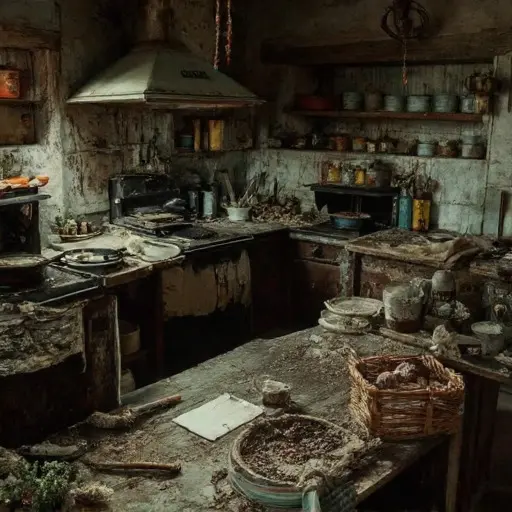
Behind a row of spice canisters, Nicolae’s formularies shift from neat ratios to erratic corrections. Several tincture batches are double-labeled, some with conflicting strengths. A torn note reads “complaint unresolved,” folded around a vial stopper. In his personal booklet, lines vibrate under pressure: “measure again—don’t trust last result.”
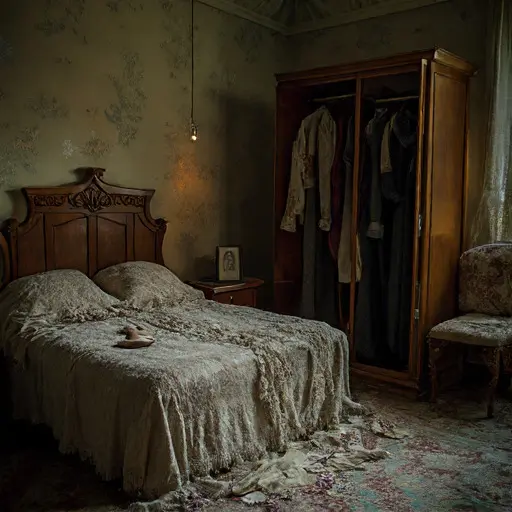
In the final drawer of the Apothecary Room, Nicolae’s last formula sits unfinished, ratios struck through until only fragments remain. No explanation marks his absence, nor Ioana’s unanswered errands.
The rooms exhale a deep stillness now, the house resigned to abandonment, its measures forever unverified.