The Eerie Nakamura Wash-Basin Loft Where the Margin Drifted Aside
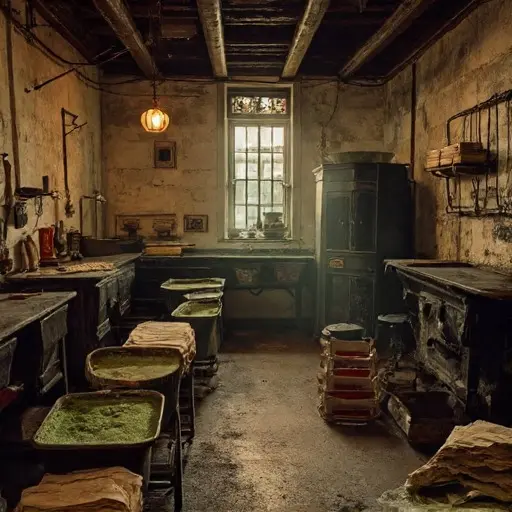
The wash-basin loft smells of damp fiber and old ink. Lanternlight gathers softly along trays where colors once drifted in slow, deliberate motions, now arrested in a hush that presses near the beams.
A Marbler Shaped by Gentle Suspensions
Kiyoshi Ren Nakamura, born 1879 in Kyoto, prepared modest marbled sheets for stationers and seamstresses.
A cotton strip from his sister Hana cushions bamboo combs sorted by tooth width. Kiyoshi mixed size at dawn, floated pigments by midday, and lifted patterns under a dim lantern. His modest beginnings echo in reused trays, faded cloths, and Japanese-script slips tucked behind enamel basins.
Patterns Straining Within Quiet Liquids
A basin of size thickens unevenly, color drifting toward one edge. A comb stands upright in a cloth stiffened by dried pigment. On the beam, a test sheet curls at the corner where moisture pooled. Even the lantern’s flame narrows toward the enamel trays, shadowing faint ripples in a suspended pattern that never quite formed its final arc.
Strain Gathering Beneath Ink and Fiber
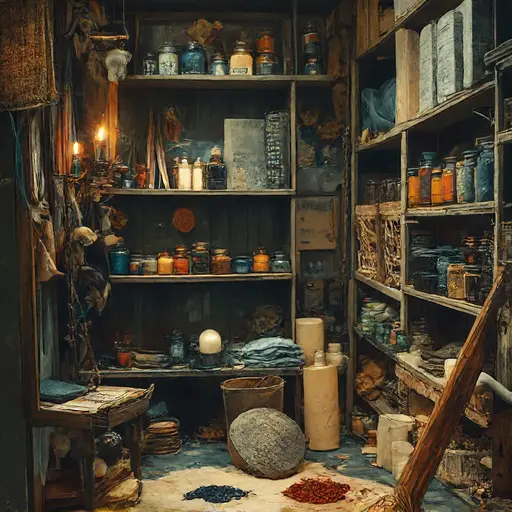
Behind stacked mulberry sheets rests a returned sample—“edges irregular.” A lifted print shows faint veils where he reworked the pull. Kiyoshi’s stool angles toward the loft ladder, suggesting long pauses spent pacing. A floating stick rests crooked across a jar, pigment dried on its tip. Thin tracks of size shimmer on the floorboards, tracing hesitant steps between basins.
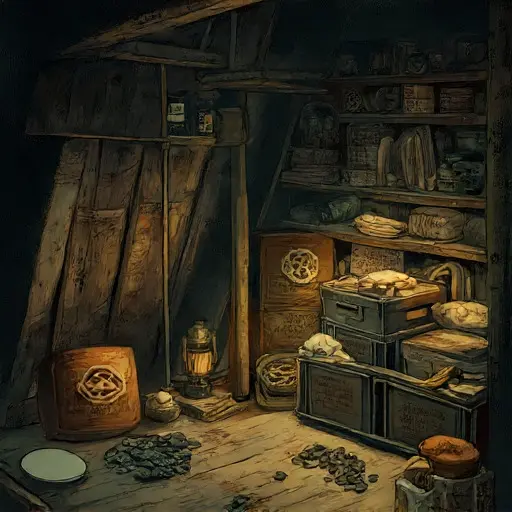
Returning to the wash-basin loft, one quiet sign lingers: a flawless pull resting beside the drifting margin—certainty and doubt sharing the same cooling air.
The house remains abandoned.