The Silent Parlour Where the Barrowes Timepiece Failed
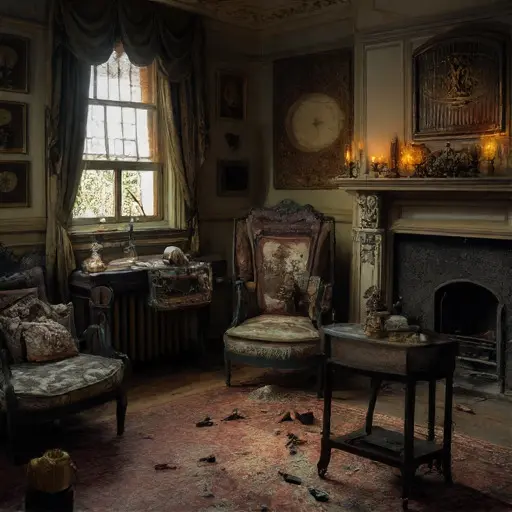
The first sensation inside the parlour is how the air still seems to hold its breath at the threshold, as if caught mid-task. Nothing has been overturned, yet everything feels paused before a confession that never arrived. A faint metallic scent clings to the brocade, neither menacing nor reassuring, only waiting.
The Clockmaker’s Quiet Ambition
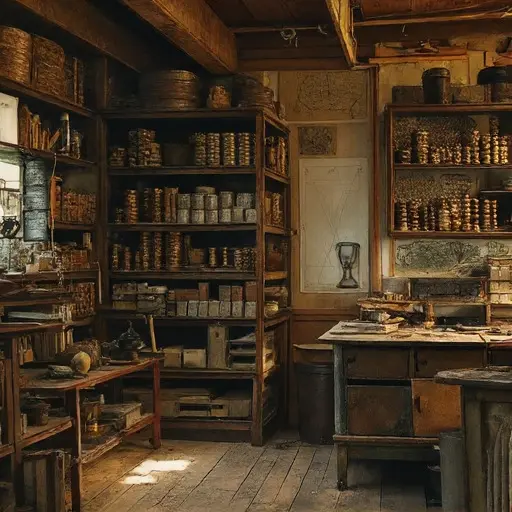
The room once belonged to Edwin Marston Barrowes, a clockmaker born 1868 in Shrewsbury. His father, Samuel, taught him precision early: steady hands, soft breathing, exact minutes. Evidence of Edwin’s routines glints from battered cases—thin files, folded chamois cloths, and a tray where he allegedly sorted commissions after supper. A letter opener engraved with modest initials hints at lower-middle-class propriety, as does the narrow writing desk wedged against the piano. His temperament emerges through increments: tools aligned by size, a teacup positioned on a saucer patterned with tiny violets, a half-restitched armrest showing impatience rather than thrift.
Hours of Work, Suddenly Suspended
The dominant timepiece—an elaborate carriage clock intended for a wealthy patron—sits half-assembled on a velvet pad. The invoices tucked beneath it are dated over months, marked “delayed” in different inks. Edwin’s life arc appears in these small hesitations: ambition curdled by pressure, promises made faster than he could honor them.
Decline and the Unspoken Turn
Something shifted late one winter: a cracked regulator rod placed gently atop the organ bench; the organ’s keys smeared with oil from unwashed hands; an envelope addressed to the patron left unsealed but empty. Family appears only in a dropped photograph of Samuel, face faded, tucked behind the pendulum case. The house speaks through omissions—no coat on the rack, no boots near the rug, yet the kettle bears fresh lime, as if boiled once more after Edwin’s presumed departure.
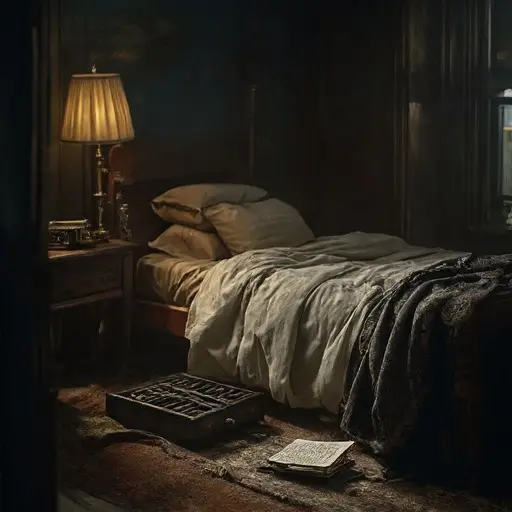
The last discovery comes in the parlour again: a small brass wheel lodged beneath the skirting board, too integral to be discarded, too essential to misplace. Its absence from the carriage clock freezes that final commission forever incomplete. The story ends in that hush, the lingering suggestion that Edwin left neither abruptly nor willingly, only silently.
The house remains abandoned.