The Eerie McAdams Gunroom Where the Mechanism Stayed Open
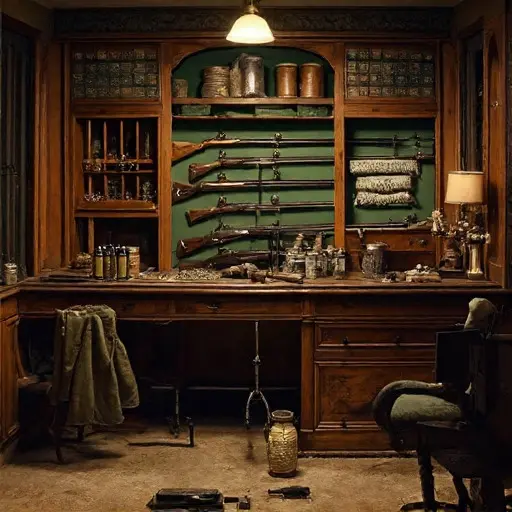
The stillness inside the gunroom folds around a faint scent of linseed oil and cold iron, holding the air taut as a coiled spring. No violence marks the room, yet the bench bears a subtle reluctance, as though a final adjustment stalled before it yielded clarity.
How a Gunsmith Shaped His Days Around a Spring
John Farrell McAdams, born 1872 in Ontario, repaired sporting rifles for local hunters.
His sister Maeve once embroidered the small cloth now cushioning the vise. John rose early to true barrel sights, spent afternoons stoning sears, and worked evenings aligning locks by lamplight. Modest means show in reused tins, frayed rolls of canvas, and improvised jigs softened by years of careful handling.
Work Pressed Into Timber and Iron
Cabinets hold rifles in differing stages of disassembly, each tagged in English script with brief notes. A lever-action stock rests beside a stripped bolt, its lugs rubbed bright. Under the bench lies a crate of American cartridges, evidence of clients from across the border. A small tin of bluing salts sits ajar, its surface clotted.
Strain Building Behind Cabinet Doors
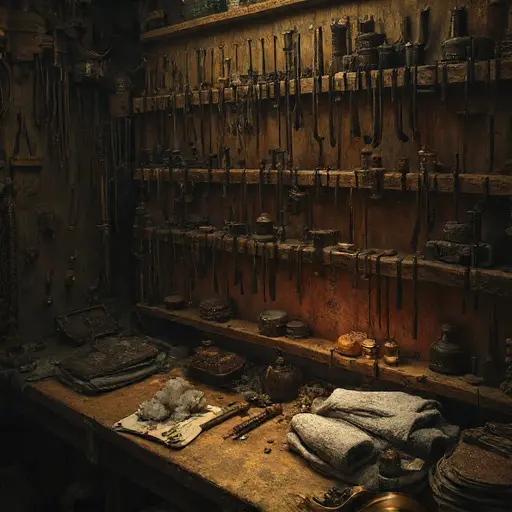
A returned order slip—“unsafe trigger pull”—lies tucked behind a powder flask. A firing pin shows a faint bend, almost invisible. John’s stool stands angled toward the door, as though he rose repeatedly to reconsider some private calculation. A thin scatter of filings leads from the bench to a locked cabinet whose key is absent from its usual nail.
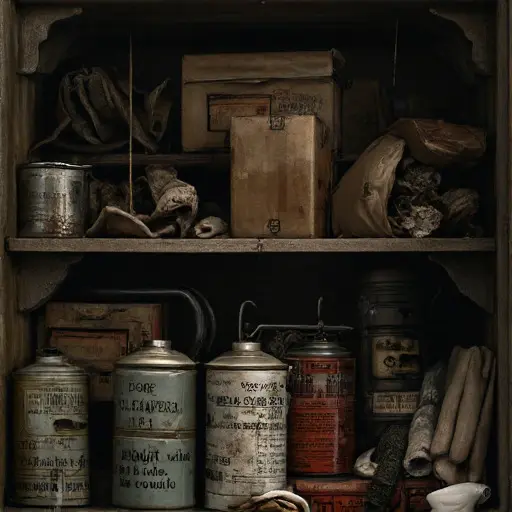
Returning to the gunroom, one detail remains: a flawless trigger floated beside its mismatched sear—perfect and doubtful, waiting for a decision John never reached.
The house remains abandoned.