The Silent Haldorsen Print Room Where the Plate Went Missing
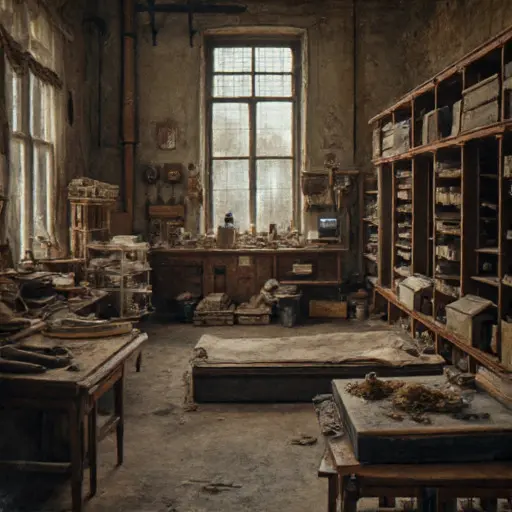
The first breath inside the print room carries a cold tang of linseed oil mixed with lingering chalk dust. No sound, only the unsettled quiet where a stone’s weight once pressed certainty into paper. Here, the air feels caught at the moment before truth darkened the page.
A Lithographer’s Narrow Path
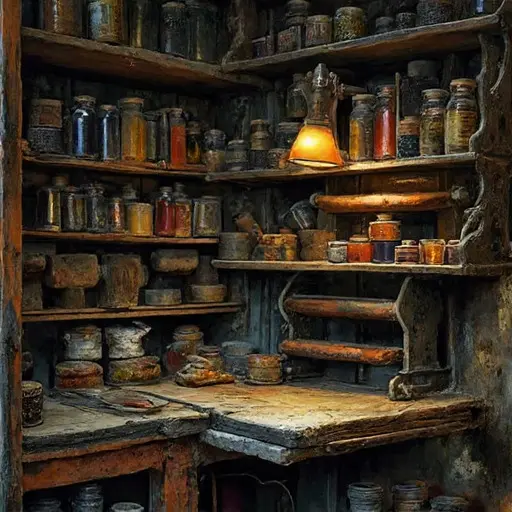
Sverre Knut Haldorsen, born 1878 near Trondheim, crafted lithographs for modest merchants. A knitted muffler from his sister Oline cushions carving tools aligned with careful thrift. Sverre lived by steady cycles: dawn graining of stone, daytime sketching, dusk rolling thin layers of ink. His humble training appears in reused cloths pressed beneath pigment pots and in the hand-cut stencils drying against a cabinet.
Impressions Set Within Domestic Corners
Drying lines hold tidy sequences of merchant labels and small scenic prints. A wooden rack supports stones marked with Norwegian-script notations—timber mills, fishing boats, quiet harbors. On the press bed, a partially inked proof shows smudged shadows, as if reconsidered. Nearby, a slender brush has stiffened mid-stroke, bristles bent by hesitation.
Strain Pressing Through the Grain
Behind the press, an unsigned notice claims Sverre’s latest image “misrepresented local dealings.” A stone set aside bears erratic graining marks—rare missteps for his disciplined hand. The foot-treadle’s position suggests pacing rather than progress. A palette knife lies edge-first in the floorboard gap, placed too precisely to be accidental.
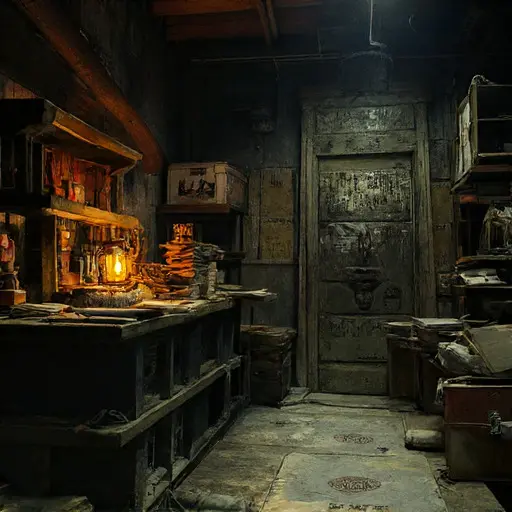
Returning to the print room, one detail waits: a perfectly pressed proof beside its blurred companion—evidence of a step Sverre could not bring himself to complete.
The house remains abandoned.