The Silent Nakamura Boiler Room Where the Valve Wouldn’t Turn
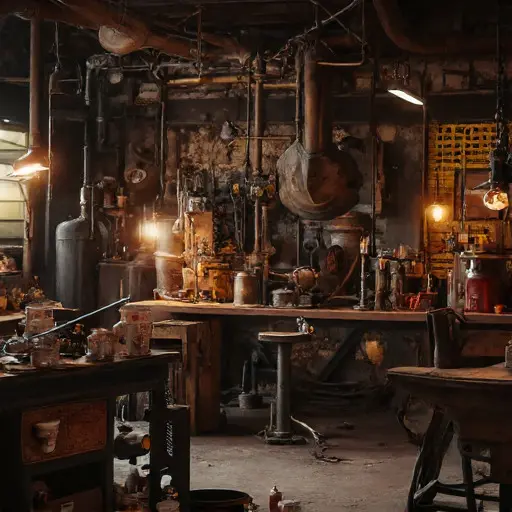
The boiler room breathes a dry metallic hush, warmth long gone but intention still clinging to the rails. A faint trace of solder drifts along the stone, and the still water pooled in a shallow basin reflects a quiet that feels recently disturbed. Each object seems to hold the shape of a gesture cut short, a careful sequence interrupted.
A Tinsmith’s Even-Handed Routine
Kazuo Hiroshi Nakamura, born 1879 in Osaka, repaired fittings for kitchen staff and itinerant steam engineers. A handwoven pouch from his sister Aiko cushions precision screwdrivers aligned by size. Kazuo began his days with quiet seam inspections, shaped copper patches by noon, then refined joints by lamplight. His modest training shows in reused flux tins stacked neatly beneath the bench and in careful notes written in Japanese script tucked beside pipe lengths.
Work Pressed Into Heat and Iron
Copper ovals lie beside a strip marked with dented guidelines. A soldering iron, still faintly warm, leans against a block. A coil of soft tubing rests on folded cloth, its curve perfect until the final inch. A pressure gauge sits crooked on the far wall, casting a thin, uncertain shadow across the pipes. A small crate of fittings shows signs of hurried sorting, as though Kazuo sought a particular piece he could not find.
Stress Collecting Beneath the Pipes
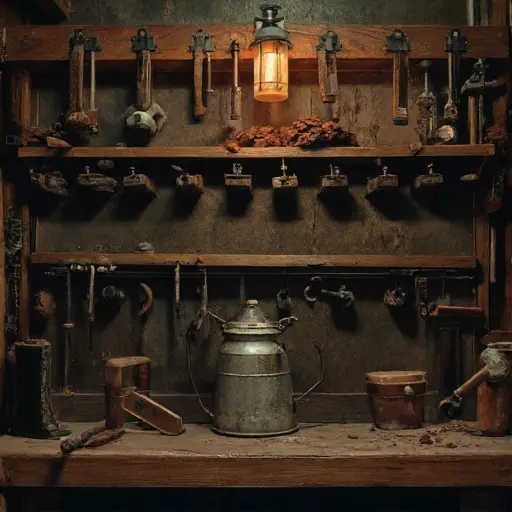
Behind a boiler tank rests a returned notice alleging “insufficient seal.” A jagged patch lies near it, seams uneven. The ladder to the upper pipes has shifted slightly, suggesting restless pacing. A dent marks the kettle rim, fresh enough to catch the light. A soft smear of soot on the rail hints at a hand bracing for balance.
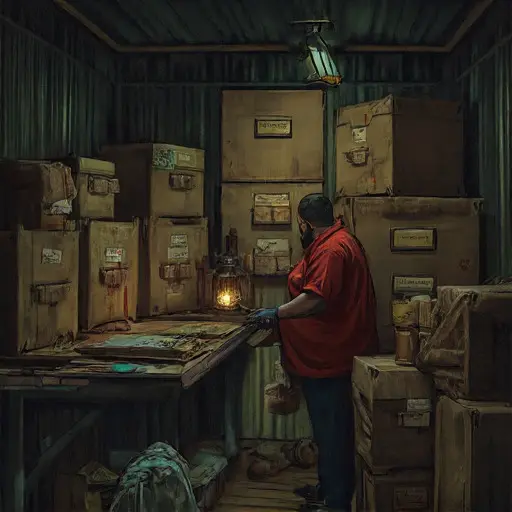
Returning to the boiler room, one quiet detail remains: Kazuo’s wrench beside the detached valve—both waiting for a decision he never finished.
The house remains abandoned.