The Hidden Vermeer Linen Room Where the Toy Lay Unfinished
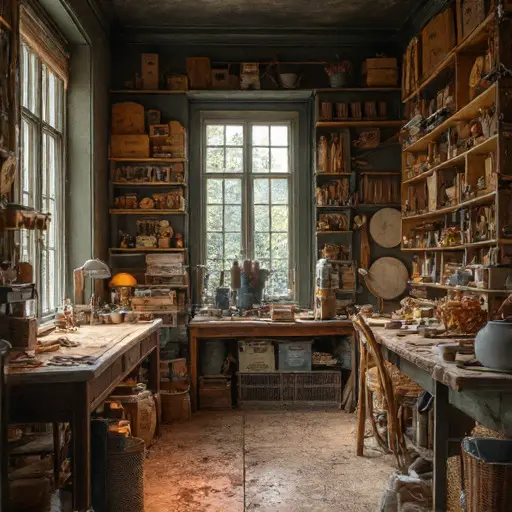
Stepping into the linen room, one notices how every folded edge seems to guard a faint crease of memory. Scents of starch, wood dust, and drying lacquer drift together. Nothing is scattered, yet something here faltered: a single dowel left on the ironing table, its curve sanded smooth but never fitted.
Where a Quiet Artisan Once Labored
Cornelis Pieter Vermeer, born 1872 in Delft, crafted modest toys for local families. A knitted muffler from his sister Annelies hangs from a cupboard knob, near sketches of windmill puzzles and jointed figurines. Cornelis worked by gentle habit: mornings shaping frames, afternoons painting tiny coats. His humble upbringing peeks through reused fabric scraps, pressed flat beneath an iron stand.
Craft Threaded Into Humble Corners
Scraps of Dutch-language price notes lie pinned beside a tin of pegs; a shallow crate of wooden wheels stands under the table, each wheel shaved to near-perfect symmetry. A small tin soldier, half-painted, leans against a book of designs marked with careful checkmarks. Cornelis’s tools sit in patient rows, revealing a life measured in calm, miniature achievements.
Rumblings Beneath the Gentle Work
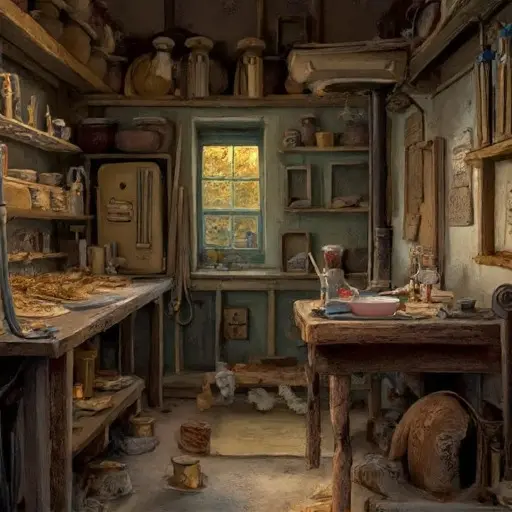
Behind the largest cupboard is a returned commission slip, noting “fragile joints” and requesting repayment. Near it, a wooden gear shows a hairline split, glued hastily. The ironing table hosts a dollhouse door with crooked paint lines—rare evidence of Cornelis’s fatigue. Linen folds appear subtly disturbed, hinting at pacing neither frantic nor steady.
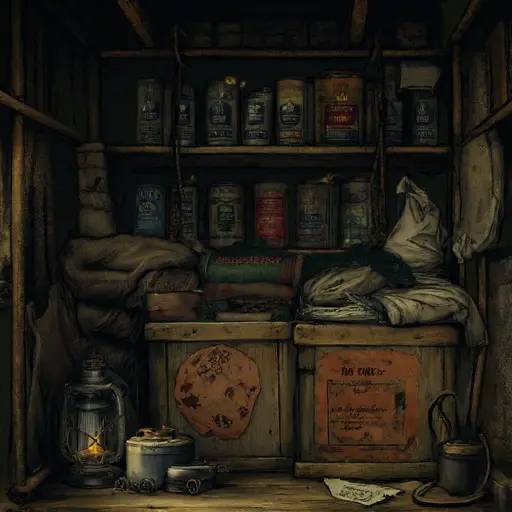
Returning to the linen room, the final clue rests on the ironing table: a tiny jacket cut for a toy, sleeves basted but buttons missing—paused at the moment Cornelis stepped away, leaving silence to finish nothing.
The house remains abandoned.