The Haunting Svoboda Morning Room Where the Binding Stopped
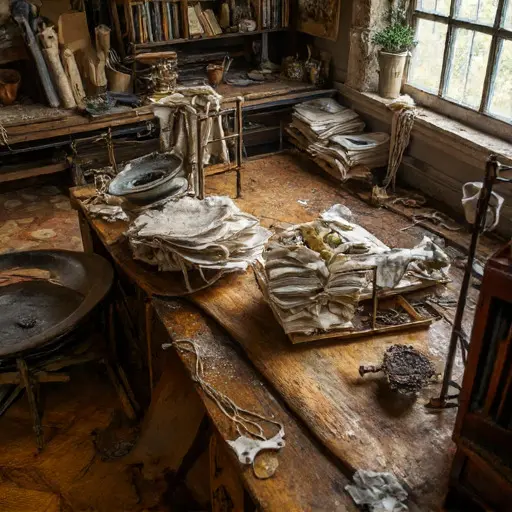
A soft warmth lingers in the morning room, as though daylight once steadied a craftsman’s pulse. Glue’s faint sweetness persists above the upholstery, mixing with papery dryness. Nothing here suggests abrupt flight, only a quiet fracture of routine—an absence that feels layered, deliberate, and uncomfortably calm.
A Craftsman Shaped by Modest Inheritances
Jan Vaclav Svoboda, born 1874 in Brno, bound ledgers and devotional volumes for traveling merchants. A linen kerchief from his aunt Tereza lies folded near a stack of trimmed quires. Jan worked early hours, stitching gatherings with practiced serenity before trimming spines. His upbringing echoes in careful reuse: vellum scraps flattened under a heavy glass weight, and a patched apron smelling faintly of clove infusions.
Patterns Pressed Into Domestic Corners
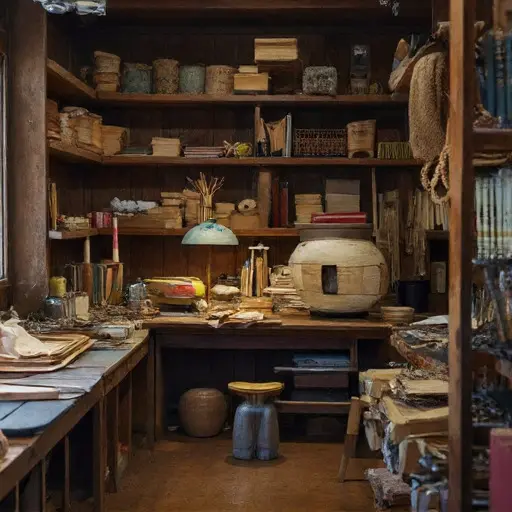
A row of Czech-language almanacs rests atop a marquetry cabinet, each spine Jan repaired with discreet thread colors. Rulers and brass gauges sit alongside dried paste, revealing a near-finished commission promising steady wages. His tools align in gentle arcs, communicating a patience that once overcame lean seasons.
Strains Beneath the Quiet Surface
Tucked behind the sewing frame is an unsigned note accusing Jan of altering a family crest on a commissioned volume. Another slip, water-spotted, hints at unpaid debts for imported papers. A spine blank bears uneven rounding, suggesting his hand faltered in the final attempt. Settle-mark dust rings the floor where he paced, pausing most often beside the kettle.
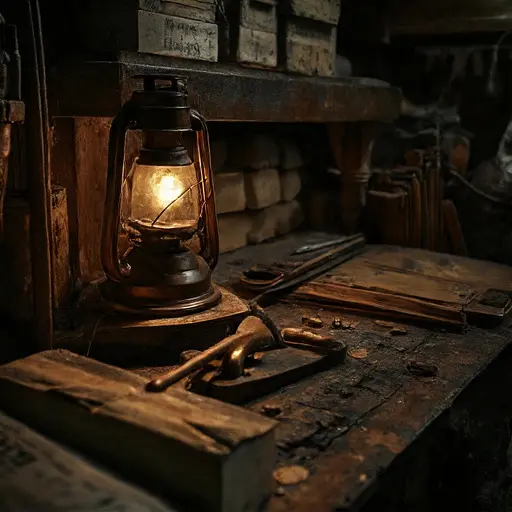
Back in the morning room, one final sign remains: Jan’s finishing tool placed neatly on an unbound stack, its warmed tip now cold. Nothing more follows—only the moment he stepped away from a craft paused mid-breath.
The house remains abandoned.