The Forgotten Amsel Ballroom Where the Score Went Unheard
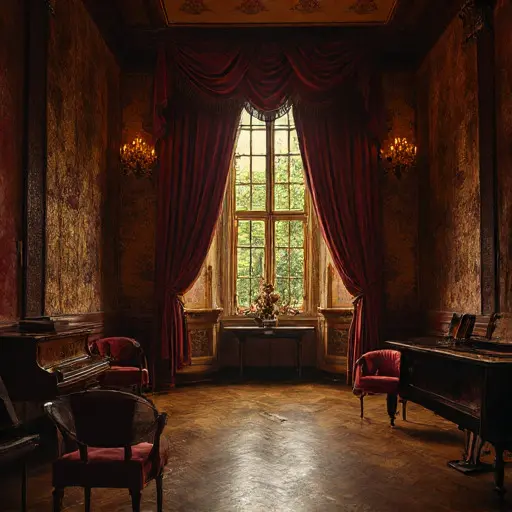
The hush inside the ballroom feels shaped by an abandoned echo, as if the walls once carried notes they could not keep. A faint scent of wax and pressed linen lingers above the keys. Nothing is overturned; only a suspended expectancy clings to the benches and music stands, as though the next measure was about to begin when everything fell still.
A Life Composed in Measures and Restraint
Ludwig Oskar Amsel, born 1870 in Linz, wrote chamber pieces for modest salons. A thin wool shawl from his sister Frida lies folded across a chair, beside score drafts inked in precise staves. Ludwig preferred dawn work: soft chords tested on muted strings, then long hours annotating orchestrations. His modest upbringing echoes through the reused staff paper tucked under a baton case, its corners worn by constant reference.
Craft Carried Through a Private Hall
Imported tuning forks rest atop a lacquered box stamped with Viennese branding. A narrow console table holds penciled motifs grouped by instrument, hinting at a new suite he intended for a traveling quartet. A stack of correspondence from regional patrons, cordial yet insistent, shows the steady pressure for faster compositions and more performances than his quiet temperament could bear.
Discord Settling at the Threshold of Silence
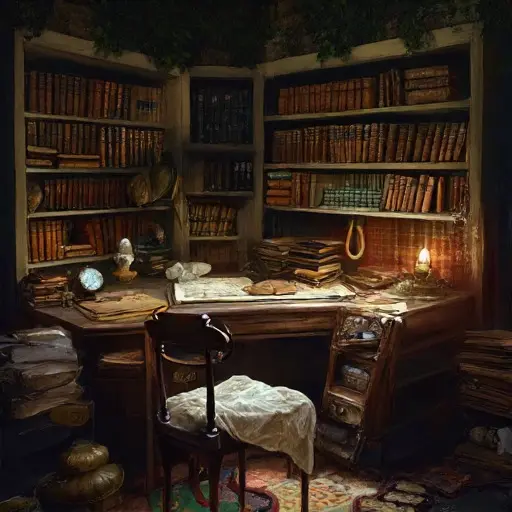
Signs of strain gather: a physician’s note recommending rest, hidden behind the piano lid; a hearing horn placed on a cushion, its stem dented; rhythm markings scratched out too heavily for Ludwig’s usual calm precision. A bow, newly rehaired, lies sideways on the floor, untouched by practice. The ballroom’s mirrors are angled unevenly, reflecting stands and benches in fractured segments.
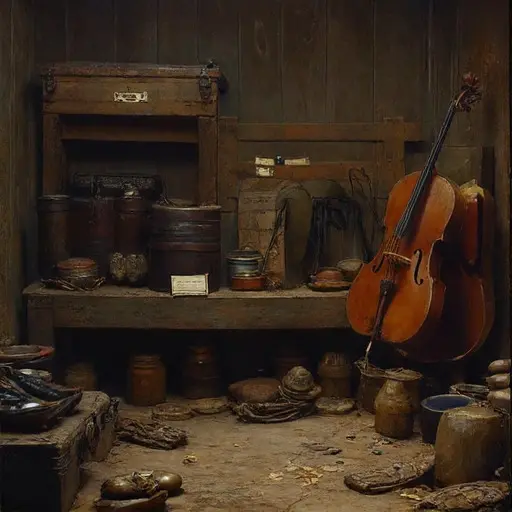
Back in the ballroom, one last fragment waits: a lone chord penciled at the edge of a score, perfectly voiced yet unresolved. It hints at a conclusion Ludwig never claimed, a final bar withheld by the silence he could no longer outpace.
The house remains abandoned.