Eerie Haddad and the Copper-Hammering Hearth-Room Where His Reverberation Thinned
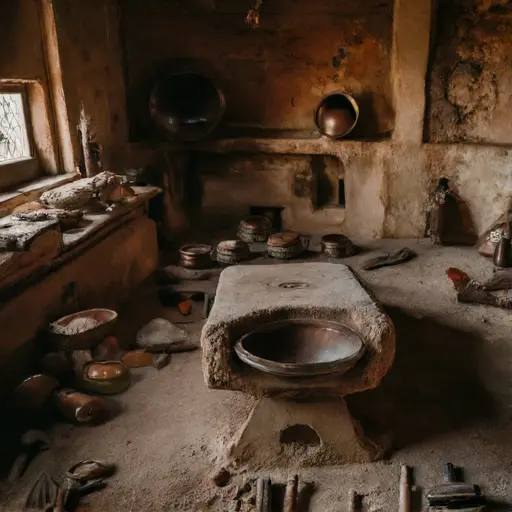
A weighted quiet inhabits Haddad House, deepest in the hearth-room where Samir Youssef Haddad, born 1871 near Damascus, once hammered copper for merchants, caravansaries, and wedding households. The dulled reverberation on his final bowl feels like a breath held to silence. His tools remain arranged with meticulous restraint—yet no hand returns to coax sound from metal.
A Reverberation Steadying the Metalworker’s Daily Craft
Samir learned measured striking from his uncle Jalal Haddad, a master coppersmith whose chipped hammer head still rests beneath a shuttered shelf. Each dawn he heated copper to a pliant glow, shaped it by alternating firm and feathered blows, and measured tone by listening to the ringing edge. Evidence of these routines persists: hammers sorted by weight, cooling troughs aligned near the furnace’s lip, faint chalk arcs scrawled on the workstone tracing each curve. A worn depression in the hearth tiles marks where he steadied his stance for long sessions of rhythmic shaping.
A Quiet Strain That Pushed His Work Off Its Intended Tone
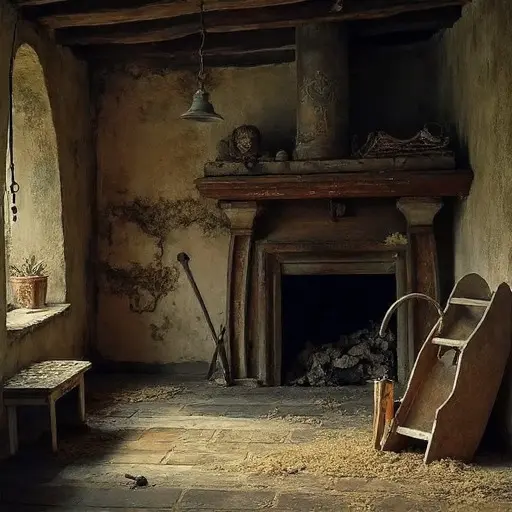
Slow rumors circled the market when a returning customer claimed a set of trays produced mismatched tones—an unthinkable lapse for Samir, famous for attuning metal by ear. In the interior corridor, Jalal’s hammer pouch hangs torn at the corner. A design-sheet droops near the wainscot, its geometric spirals overwritten in wavering strokes. Beneath a narrow cedar stool lies a fractured anvil wedge, though no shards scatter nearby. A faint trail of copper dust marks a single stair tread—evidence of metal handled with an increasingly uncertain grip. None of these clues prove failure outright, yet each hints at a tension Samir kept contained.
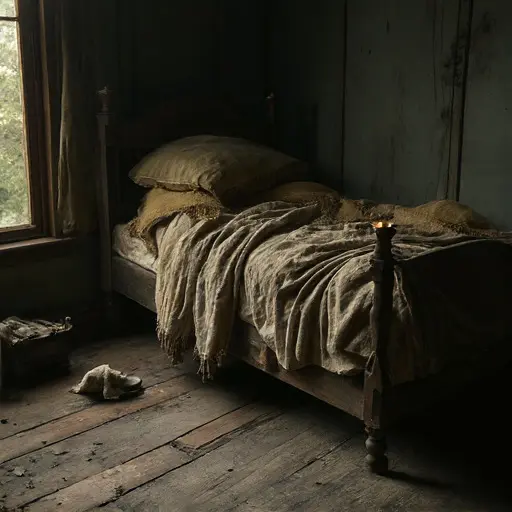
Only the thinned reverberation on his last bowl remains—an intention caught between tone and silence. Whatever unsettled Samir’s practiced steadiness persists unspoken.
Haddad House remains abandoned still.