Haunting Beaumont and the Perfumer’s Maceration-Room Where His Note Faltered
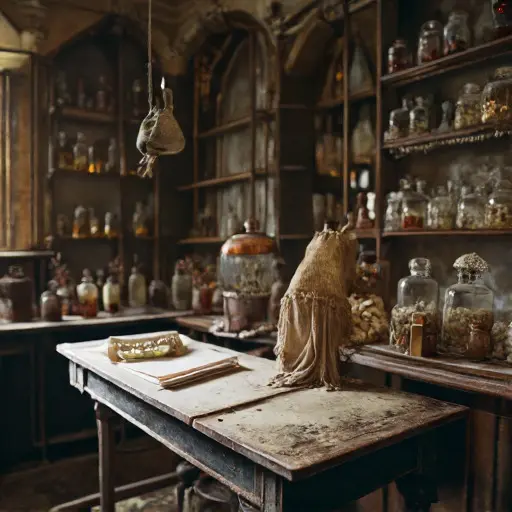
A hushed, fragrant absence lingers through Beaumont House, thickest in the maceration-room where Étienne Lucien Beaumont, born 1879 in Grasse, once crafted bespoke perfumes for salons, apothecaries, and traveling couturiers. The faltered note on that blotting strip seems to hold a breath of indecision. His implements remain in precise formation—yet no hand stirs the tinctures he left suspended in pause.
A Note at the Center of the Perfumer’s Careful Routine
Étienne learned balanced composition from his mother Cécile Beaumont, a flower grower whose dented copper still rests beneath the shuttered shelf. Each dawn he measured petals by handful, calibrated alcohol strength, and tested accords beneath lamplight. Proof of these habits lingers—pipettes aligned by length, mortars grouped by material, faint pencil circles on the table marking where he balanced small vials before blending. Even the scuffed tile near the window bears the ghost of his stance as he compared a new note against established accords.
A Quiet Strain That Derailed His Intended Harmony
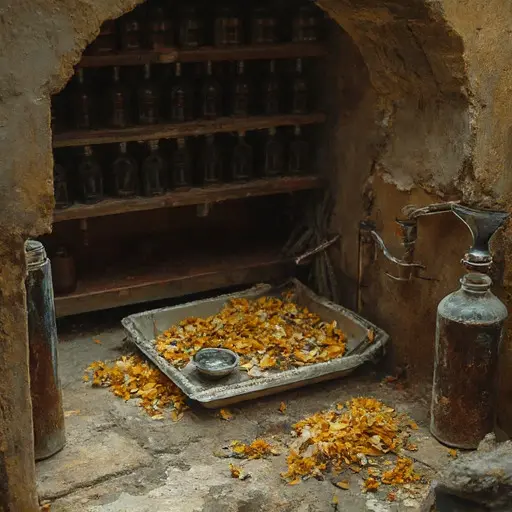
Soft whispers spread when a client returned an exclusive blend, saying its heart note “dissolved unpredictably”—a jarring claim against Étienne’s reputation for near-clinical balance. In the interior corridor, Cécile’s copper still-strap lies torn at the clasp. A formula sheet slumps beside the wainscot, its proportions overwritten in wavering strokes. Beneath a narrow chair rests a vial stopper cracked down its center, though no shards lie nearby. A faint track of resin dust marks a single stair tread—sign of materials handled with an increasingly uncertain grip. None of these fragments confirm failure absolutely, yet each leans toward a tension he never admitted aloud.
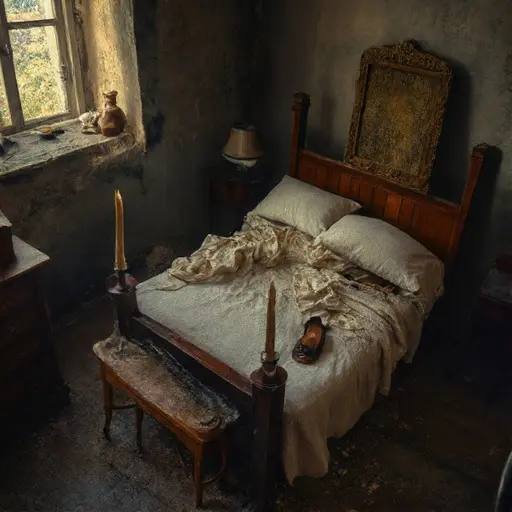
Only the broken note on his final strip remains—an intention caught between clarity and hesitation. Whatever unsettled Étienne’s practiced harmony stays unanswered.
Beaumont House remains abandoned still.