Hidden Nakamura and the Ink-Stone Study Where His Stroke Drifted
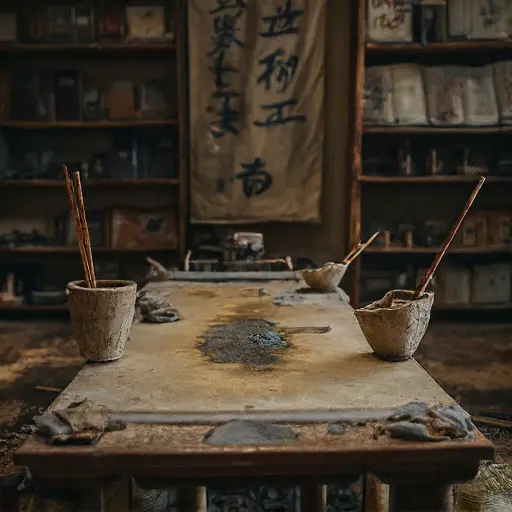
A delicate hush envelopes Nakamura House, thickest in the study where Satoru Kenji Nakamura, born 1876 in Nara, once practiced calligraphy for temples and private patrons. The drifting stroke on his final sheet lingers like a thought abandoned mid-meaning. Every object remains as he arranged it—precise, patient, and suspended between breaths.
A Stroke Rooted in the Calligrapher’s Daily Composure
Satoru learned brush discipline from his father Masao Nakamura, a temple clerk whose chipped ink bowl rests near a wicker mat by the hearth. Each dawn he warmed the ink cake against fresh water, steadied his posture, and tested brush softness with practiced thumb pressure. His patterns linger still—rolls of washi sorted by weight, water droppers positioned in neat pairs, a floor cushion indented where he knelt to align breath and gesture. Even the faint smudge across the lacquered table’s edge preserves the arc where he lifted the brush before committing each stroke to silence.
A Subtle Pressure That Pulled His Craft Off Form
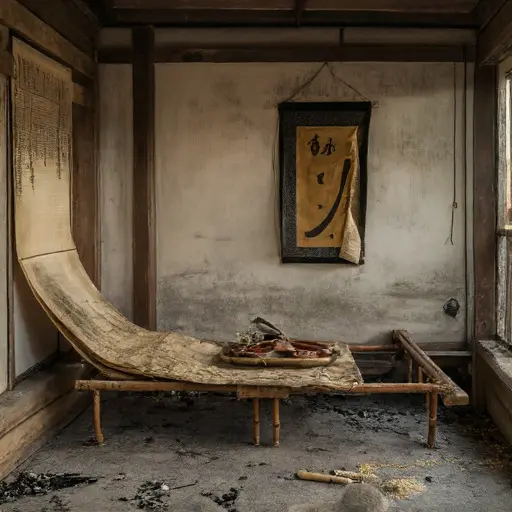
Quiet rumor suggested a commissioned sutra panel revealed uneven characters—an unfamiliar lapse for Satoru, whose work once carried the calm surety of temple tradition. In the interior corridor, Masao’s ink bowl pouch lies torn at the drawstring. A clay water dipper rests overturned against the skirting board. Beneath a narrow cabinet sits a revision sheet, its strokes overwritten in wavering ink. A thin trail of black dust marks a single stair step—residue shaken loose from an unsteady hand. None of these traces prove error, yet each hints at a strain he bore silently, tightened by expectations he no longer trusted himself to meet.
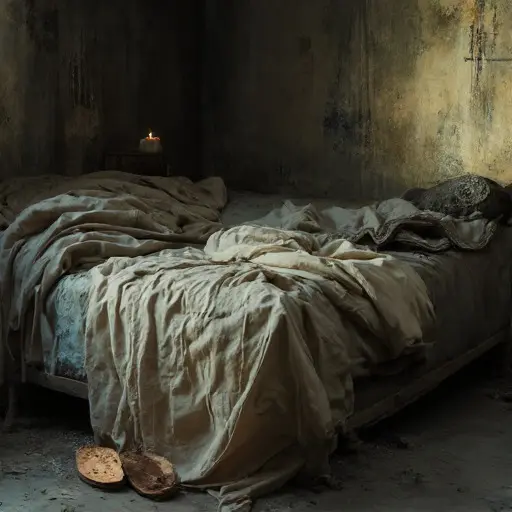
Only the drifting stroke on his final page remains—an interrupted certainty held in muted air. Whatever stilled Satoru’s practiced hand persists unresolved.
Nakamura House remains abandoned still.