Hidden Ocampo and the Candle-Casting Cellar Where His Molds Warped
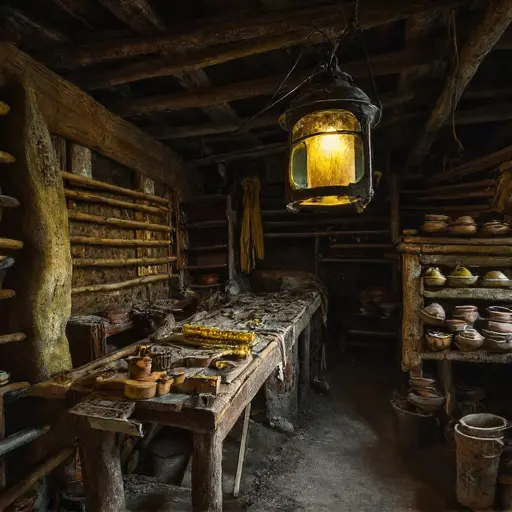
A low hush settles inside Ocampo House, heaviest in the abandoned candle-casting cellar where Mateo Robles Ocampo, a modest maker of devotional tapers for neighbors, once tested wax by scent and sheen. Now the uneven tilt along his final shaping paddle lingers like a doubt he could not steady.
A Tilt Stirring Through the Candle-Maker’s Routine
Mateo, born 1875 in Batangas, learned wax-rendering from his mother Soledad Ocampo, whose cracked ladle hangs beside the furnace stones.
His mornings followed steady rhythm: coconut husk charcoal stoked to gentle heat, wax blocks shaved into bowls, wicks measured by forearm length and looped across drying sticks. His order endures—pigment jars aligned by festival hue, molds set in alternating rows, scissors resting where his thumb once pressed firm. Even the worn hollow in the furnace stool recalls where he paused to judge whether the day’s blend cooled too quickly to hold shape.
When His Craft Drifted Out of Line
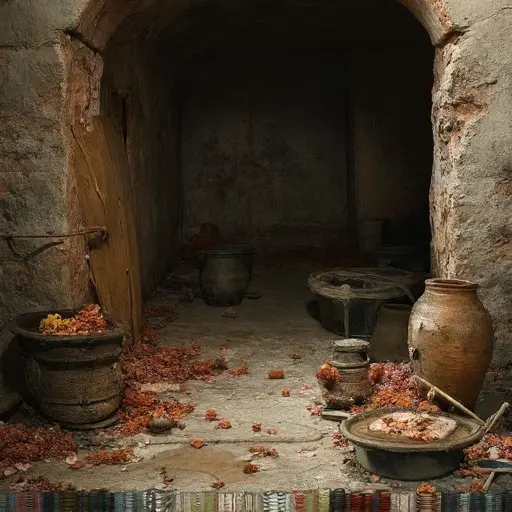
Soft rumor claimed Mateo’s latest offering candles—meant for a baptism—melted too quickly, staining linens and stirring awkward disappointment. In the inner hallway, Soledad’s ladle pouch lies torn at the seam. A wick bundle rests crooked near the wainscoting, strands uneven. A folded correction sheet leans beneath a shelf, final cooling adjustments overwritten into near silence. A thin trail of wax beads tracks down a stair, hardened mid-drip. None of these fragments confirm a mistake, yet each leans toward a concern Mateo kept close to the chest.
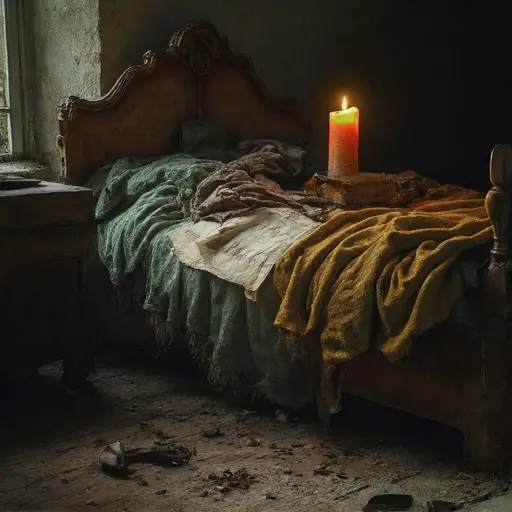
Only the fading tilt on his last tool remains—an unfinished intention resting in still air. Whatever stilled Mateo’s hands endures unanswered.
Ocampo House remains abandoned still.