Haunting Beaumont and the Miniature-Painting Parlour Where His Lines Frayed
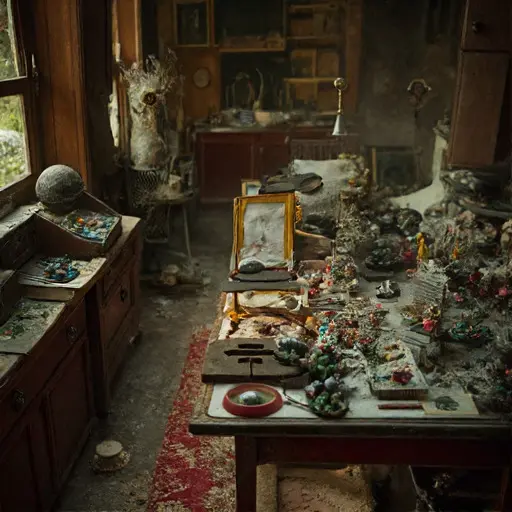
A dim, breath-held quiet occupies Beaumont House, deepest in the abandoned miniature-painting parlour where Lucien Adrien Beaumont, a modest French portrait miniaturist known for steady strokes, once coaxed likeness from the tiniest canvas. Now the frayed thread of paint on his last card lingers like a truth he could not finish shaping.
A Thread Suspended in the Painter’s Gentle Routine
Lucien, born 1872 in Lyon, learned brushwork from his aunt Élise Beaumont, whose cracked porcelain palette rests near a stack of frames.
His afternoons unfolded with unwavering calm: pigments ground beneath a warm lamp, brushes tested on linen scraps, portrait ovals mapped in pencil arcs no wider than a thumb. His order persists—pigments sorted by hue, magnifiers balanced on a narrow shelf, cloths folded into thirds for steadying his wrist. Even the worn lip of the easel recalls where he paused, deciding whether a highlight drifted too sharp for the sitter’s gentle brow.
When His Craft Strayed Beyond His Nerve
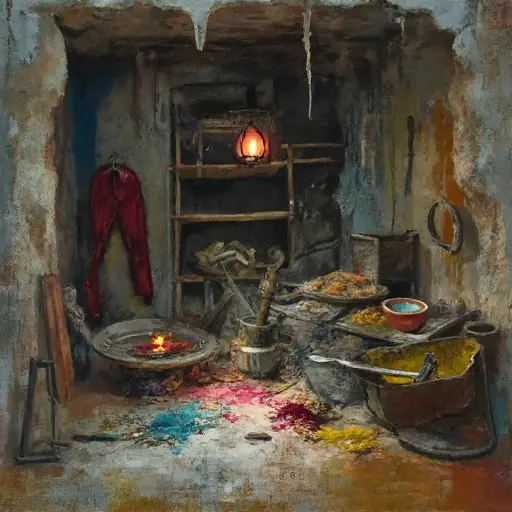
Whispers murmured that Lucien’s latest commission—an engagement portrait—failed to capture the sitter’s likeness, sparking murmured disappointment from the family who’d hoped to gift it. In the interior corridor, Élise’s porcelain palette pouch lies torn at the clasp. A brush roll rests crookedly near the wainscoting, its bristles splayed. A revised sketch sits beneath the stair rail, final features erased into smudged vagueness. A spill of powdered vermilion traces one step, marking hurried movements. None of these remnants prove misjudgment, yet each leans toward a doubt he carried behind composed silence.
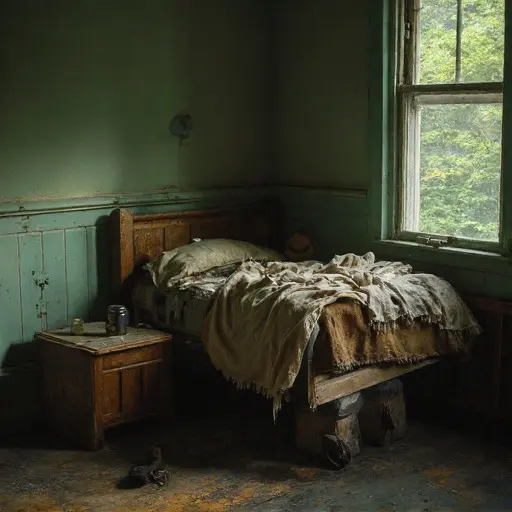
Only the thinning thread on his final card remains—an unfinished contour settling into stillness. Whatever stilled Lucien’s hands endures without resolution.
Beaumont House remains abandoned still.