Shrouded Baumann and the Clock-Loft Where His Hours Slipped
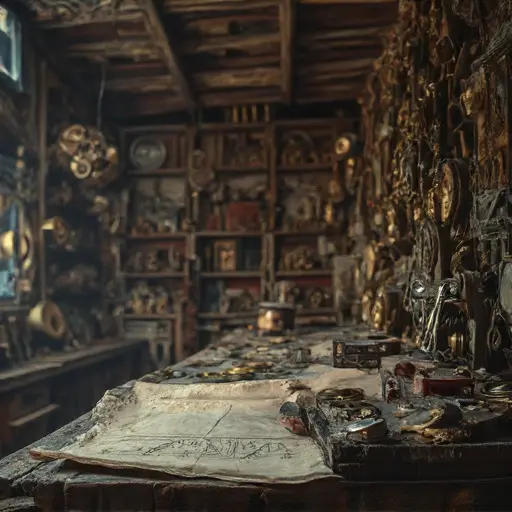
A close quiet breathes through Baumann House, anchored in the abandoned clock-loft where Rudolf Heinrich Baumann, a modest Swiss clockmaker known for repair rather than innovation, once bent over delicate mechanisms deep into the night. Now the faltering pivot drawn on his vellum sheet remains the only hint of an hour he failed to reconcile.
A Pivot Inside the Clockmaker’s Patient Craft
Rudolf, born 1872 near Bern, learned fine movement assembly from his older brother Matteo Baumann, whose cracked brass caliper sits near the loft rail.
His routine followed a measured cadence: gears rinsed in warm alcohol, escapements tested by tapping the bench, spring tension logged in precise columns. His careful order persists—ratchets separated by size, screw tins aligned along the sill, cloths folded neatly beside the vise. Even the faint wear near the stool’s base recalls the angle of his posture when he leaned forward to judge the last fraction of balance.
Where His Precision Drifted Out of Line
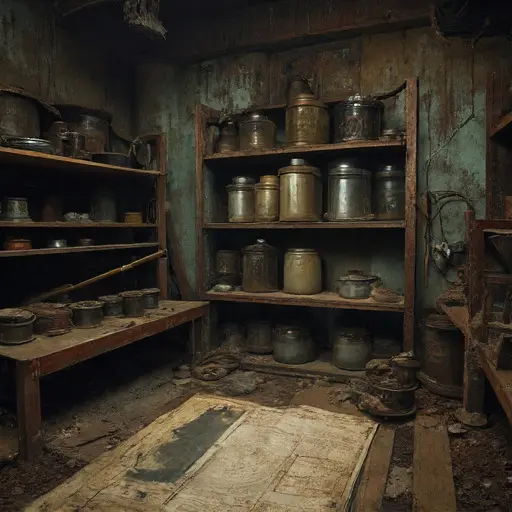
Low rumors suggested Rudolf returned a tower clock to its parish slightly fast—but fast enough to unsettle trust in his method. In the upper hallway, Matteo’s caliper pouch sits torn, its seam stretched. A gear wheel has rolled against the wainscoting, teeth chipped. A scrap of repair notes lies beneath a coat hook, final ratios violently overwritten. A tin of screws rests overturned, its contents glinting across the floor in scattered constellations. Nothing here confirms error, yet each sign leans toward a craftsman wrestling with doubt he dared not voice.
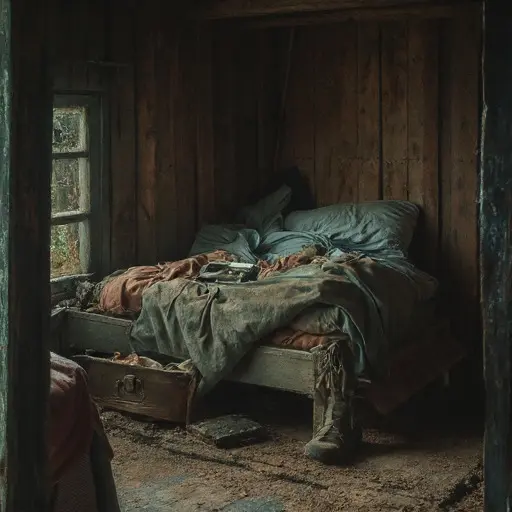
Only the trembling pivot on his last vellum sheet endures—an unfinished calibration suspended in stillness. Whatever stilled Rudolf’s hands lingers quietly in these abandoned rooms.
Baumann House remains abandoned still.